


Francis Pan
Francis Pan is the Foreign Trade Manager of RAYMAX, with over 10 years of experience in sheet metal fabrication equipment and CNC machinery. He has worked closely with manufacturers worldwide on press brakes, fiber laser cutting machines, fiber laser welding machines, and practical production-oriented metal processing solutions.
Top Guidelines
-1024x768.jpg)
-1024x768.jpg)
-1024x768.jpg)
-1024x768.jpg)
Table Of Contents
Stay in the the loop
Subscribe To Our Newsletter
Quick Answer
A pneumatic press brake is a light-duty bending machine, powered by compressed air. It is suitable for applications involving thin sheets, small parts, simple brackets, cover plates, and panel components, where high bending force, precision, and production efficiency are not required. Its advantages include a relatively simple structure, lower initial cost, minimal maintenance requirements, and the absence of a hydraulic oil system.
However, pneumatic press brakes are not low-cost alternatives to hydraulic or CNC press brakes. Their core limitations are clear: they have limited bending force, rely heavily on a stable air supply, and are unsuitable for thick sheets, long workpieces, high-precision batch production, complex parts requiring multiple bends, and applications requiring high angle consistency.
If you are evaluating a pneumatic press brake, first confirm your material type, sheet thickness, maximum bending length, angle tolerance, production cycle time, and workpiece complexity. RAYMAX can assess your specific operating conditions, to determine whether a pneumatic press brake is suitable for your needs, or if you should upgrade to a hydraulic or CNC press brake.
Is a pneumatic press brake right for you? 30-second decision guide
|
Application characteristics |
Suitable for pneumatic press brakes |
Recommended options |
Reasons for the decision |
|---|---|---|---|
|
Light-gauge sheet metal, small parts, low tonnage requirements |
Suitable |
Pneumatic press brake |
Lower bending force requirements, resulting in lower costs |
|
Simple brackets, cover plates, small panels |
Suitable |
Pneumatic press brake or basic CNC press brake |
Simple workpiece structure |
|
Low budget, low to medium production efficiency |
May be considered |
Pneumatic press brake |
Low initial costs |
|
Desire to reduce hydraulic fluid contamination and hydraulic system maintenance |
May be considered |
Pneumatic press brake or electric press brake |
Pneumatic systems do not use hydraulic oil |
|
Medium- to heavy-gauge sheet metal, stainless steel, high-strength materials |
Not recommended |
CNC hydraulic press brake |
Higher material strength and tonnage requirements |
|
Long workpieces, wide sheet metal parts |
Not recommended |
CNC press brake with crowning |
Need to ensure angle consistency at both ends and the center of long workpieces |
|
High-precision batch production |
Not recommended |
CNC hydraulic/servo-hydraulic press brake |
Requires more stable ram penetration depth control, compensation, and backgauge positioning |
|
Deep-flanged parts, box-shaped parts |
Not recommended |
3-4-axis or 6-axis CNC press brake |
Requires more flexible positioning and program management |
|
Frequent changeovers, high-mix orders |
Depends on complexity |
3-4-axis CNC press brake |
Limited efficiency of pneumatic equipment |
|
Automated production lines |
Not recommended |
CNC press brake + automation interface |
Requires a more stable control system and interlocking capabilities |
What is a pneumatic press brake? Scope of Application and Key Limitations
Definition of Pneumatic Press Brake machine
A pneumatic press brake is a press brake that utilizes an air-driven system. It generates power through compressed air to drive a punch, that bends and forms metal materials.
Pneumatic press brakes do not use hydraulic oil systems, resulting in a relatively cleaner operating environment; however, they still rely on a stable, dry, and clean supply of compressed air.
Basic Construction of a Pneumatic Press Brake
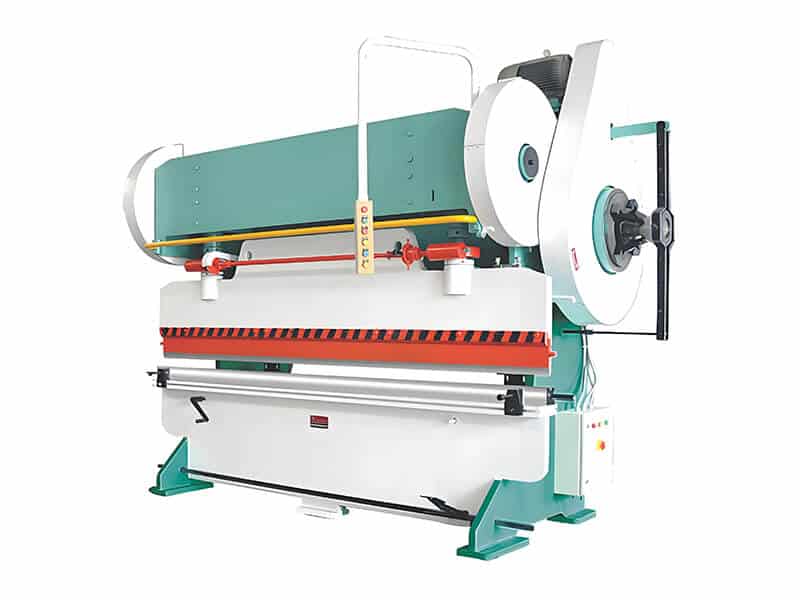
Working Principle of Pneumatic Press Brakes
basic working principle of pneumatic press brake machine
The working principle of a pneumatic press brake, involves using compressed air to generate the pressure required to bend metal. The punch uses this pressure to push the metal material into the tooling, bending it into shape.
User Guide for Pneumatic Press Brakes
Assuming this is your first time operating a pneumatic press brake, here is the workflow:
Differences in Operating Principles Compared to Traditional Mechanical/Hydraulic Systems
Traditional mechanical systems use mechanical levers, or inertia to generate kinetic energy, while hydraulic systems rely on hydraulic fluid for drive. In contrast, pneumatic press brakes utilize compressed air, to provide kinetic energy. If you want to understand how hydraulic systems generate higher and more stable bending force for thicker sheets and long workpieces, you can read our guide to the hydraulic press brake working principle.
So, compared to these systems, what are the specific advantages and limitations of pneumatic press brakes?
We will discuss this in detail in Chapter 4 below.
Advantages, Limitations, and Unsuitable Applications of Pneumatic Press Brakes
advantages
limitations
When is a pneumatic press brake not recommended?
In the following types of operating conditions, it is not recommended to use a pneumatic press brake as the primary production equipment:
|
Not recommended for |
Reasons |
More suitable options |
|---|---|---|
|
Thick plates or high-strength materials |
Limited bending force |
CNC hydraulic press brakes |
|
Bending long workpieces |
Requires consistent angle control along the entire length |
CNC press brakes with crowning |
|
Batch processing of stainless steel |
Stainless steel exhibits more significant springback, requiring higher tonnage and greater compensation |
CNC hydraulic/servo-hydraulic press brakes |
|
High-precision angle requirements |
High demands on control of air pressure fluctuations, mechanical rigidity, and precision |
CNC press brakes |
|
Complex parts requiring multiple bends |
Requires program management, backgauge positioning, and bending sequence management |
3-4 axis CNC press brakes |
|
Deep-flanged parts and box-shaped parts |
Prone to collisions and positioning difficulties |
6-axis CNC press brakes |
|
Stable production across multiple shifts |
High demands on equipment consistency, maintenance, and program reusability |
CNC hydraulic press brakes |
|
Future integration with automation |
Insufficient equipment expandability |
CNC press brakes with automation interface |
Simply put, pneumatic press brakes are suitable for light-duty applications, where bending accuracy requirements are not high, and costs are low; however, if you require more stable machining accuracy, batch consistency, long-term production capacity, or need to process complex parts, then a pneumatic press brake is not the best choice.
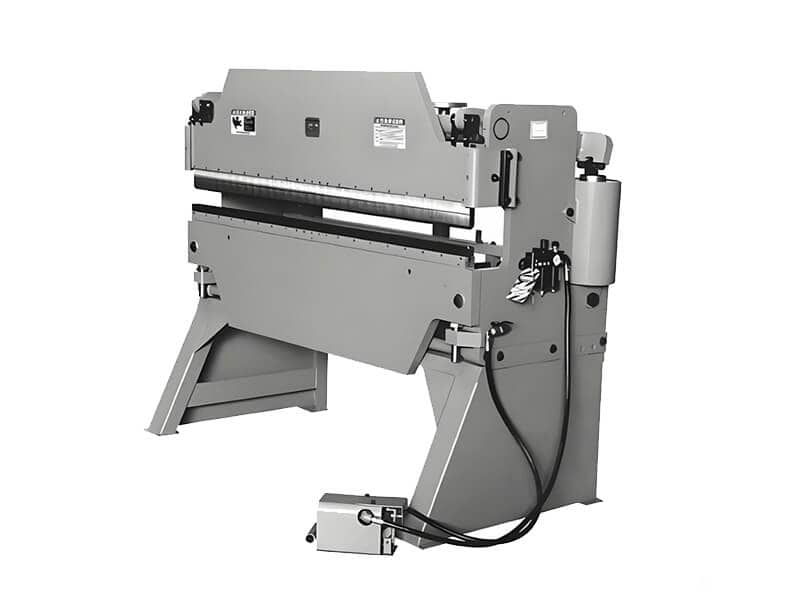
Pneumatic vs Hydraulic vs Electric Press Brakes: Key Differences
Performance Parameters and Application Differences
Tonnage Range:
Hydraulic press brakes are suitable for a wide range of tonnages; electric press brakes are primarily used for small to medium tonnages, and are suitable for processing thin sheets, or materials of medium thickness; pneumatic press brakes are mainly used for bending lightweight, thin sheets and have the narrowest tonnage range.
However, when selecting a specific type of press brake, factors such as rated bending force, bending length, and material strength must be considered in addition to tonnage.
Accuracy:
Pneumatic press brakes are suitable for processing workpieces with low accuracy requirements and light loads, while hydraulic and electric press brakes are better suited for high-precision batch production. However, actual bending accuracy is not determined solely by the drive method, but is also influenced by factors such as material, tooling, and process.
Maintenance costs:
Energy consumption:
Suitable Sheet Thickness/Materials:
Pneumatic press brakes are suitable for thin sheets, while hydraulic press brakes can process sheets ranging from thin to thick. Electric press brakes are better suited for medium-to-small tonnage applications, scenarios requiring high positioning accuracy, and production environments prioritizing energy efficiency and cleanliness.
Comparison of Typical Application Scenarios
Comparison Table of Advantages and Disadvantages
|
Model |
Pneumatic press brake |
Hydraulic press brake |
Electric press brake |
|---|---|---|---|
|
Cost |
Low |
High |
Medium to high |
|
Control capability |
Basic controls |
Mature CNC control |
Fast servo response |
|
Bending force |
Small |
Large |
Medium |
|
Energy consumption features |
Depends on compressor efficiency and line leakage |
Higher cost under heavy-duty operation |
More cost-effective for small to medium tonnage |
|
Suitable materials |
Lightweight, thin, small parts |
Medium-to-thick plates and long workpieces |
Precision parts for small to medium tonnage |
Recommended Applications and Suggestions
If your main decision is no longer whether to buy a pneumatic machine, but whether an electric or hydraulic model is more suitable for your production, you can also read our detailed electric vs hydraulic press brake comparison for a clearer selection framework.
If a pneumatic press brake is insufficient, which type of press brake should you upgrade to?
If a pneumatic press brake can no longer meet your current and future processing needs, you should evaluate CNC press brake solutions in advance, taking into account future order types, material ranges, production volume growth, and automation requirements when making your selection.
|
Current requirements |
Limitations of pneumatic press brakes |
Recommended upgrade options |
Reasons for suitability |
|---|---|---|---|
|
Need to process thicker sheet metal |
Insufficient bending force |
CNC hydraulic press brake |
Wider tonnage range |
|
Need more consistent angular accuracy |
Significant air pressure fluctuations and unstable control accuracy |
CNC press brake |
More stable control systems, compensation, and program management |
|
Standard sheet metal parts, small to medium batches of multiple varieties |
Low efficiency in manual adjustment and repeatable positioning |
3- or 4-axis CNC press brake |
Balances cost, backgauge positioning, and changeover efficiency |
|
Asymmetrical parts, deep-flanged parts, box-shaped parts |
Insufficient positioning freedom |
6-axis CNC press brake |
Greater flexibility in backgauge adjustment |
|
Angle inconsistency in long workpieces |
Lack of crowning |
CNC press brake with crowning |
Improved angle consistency between the center and both ends |
|
Future plans for automated production |
Limited expandability |
CNC press brake + Automation interface |
Better suited for robots, follow-up material support, and offline programming |
If you are planning to upgrade to a CNC press brake, we recommend first confirming your material type, sheet thickness range, maximum bending length, workpiece complexity, and production capacity. RAYMAX can provide configuration recommendations based on your specific operating conditions.
Ready To Upgrade Your Metal Fabrication Line?
Email Us For A Free Consultation.
Typical applications of pneumatic press brakes
Industry coverage
Typical Process Examples
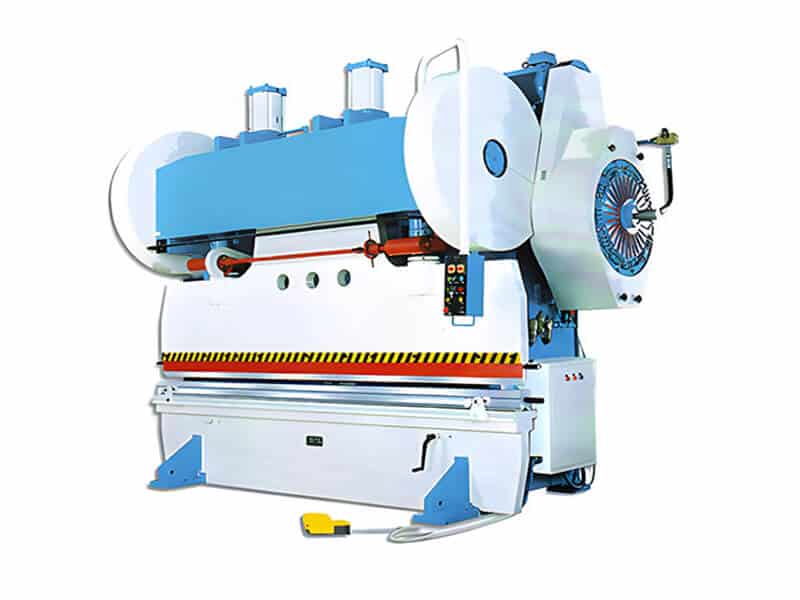
Maintenance and Care Guide for Pneumatic Press Brakes
Key Points for Daily Maintenance
Common Faults and Troubleshooting Recommendations
Professional Recommendations for Improving Equipment Lifespan and Performance
Purchasing and Selection Guide for Pneumatic Press Brakes
Key Considerations Before Purchasing
Key Selection Criteria: How to Choose the Right Pneumatic Press Brake Model Based on Your Company’s Actual Needs
Do Not Select a Model Based Solely on the Name “Pneumatic Press Brake”
When purchasing a pneumatic press brake, do not focus solely on the equipment name, price, or brand; instead, prioritize verifying these key parameters and configurations: rated bending force, maximum bending length, air supply pressure, cylinder specifications, frame rigidity, tooling compatibility, backgauge configuration, and safety protection methods.
For a broader machine selection checklist covering tonnage, bending length, control system, tooling, safety, acceptance requirements, and supplier comparison, you can refer to our complete press brake buyers guide before making a final purchase decision.
If a pneumatic press brake no longer meets your processing requirements, we recommend directly evaluating CNC hydraulic press brakes, electric press brakes, or 3-4 axis/6-axis CNC press brakes.
Conclusion
Pneumatic press brakes are well-suited for simple parts, lightweight thin sheets, and low-to-medium production volumes. Their advantages include a simple structure, no need for a hydraulic oil system, and lower initial costs; however, their bending force is limited, and they rely heavily on the stability of the air supply. For complex parts and workpieces requiring high angle consistency, their bending capabilities are limited.
When making a purchase decision, one should not focus solely on price but first clarify the material, sheet thickness, maximum bending length, bending accuracy, production pace, and future order types. If there is currently a significant demand for thick sheets, stainless steel, long workpieces, deep-flanged parts, box-shaped parts, or high-precision batch production, one should directly evaluate configurations for CNC hydraulic press brakes, electric press brakes, or multi-axis CNC press brakes.
Ready To Upgrade Your Metal Fabrication Line?
Email Us For A Free Consultation.
FAQ
Related Blog
Press Brake Tooling Compatibility Guide: Punch & Die Standards, Segmented Tools & Clamping Fit
Press Brake Price Guide 2026: Cost Factors, Options & Accurate Quotes
Tooling & Clamping for High-Mix Production: Quick Clamp vs Hydraulic Clamp vs Manual Clamp ROI
Press Brake FAT/SAT Acceptance Checklist: Accuracy Tests, Tolerance & Documentation
Press Brake RFQ Checklist: 14 Fields You Must Provide for an Accurate Quote
-1024x768.jpg)
Press Brake Crowning Troubleshooting: Fix Uneven Bend Angles Across Long Parts
-1024x768.jpg)
Press Brake Tonnage Comparison: Air Bending vs Bottoming vs Coining (How Force Changes + Safety Margin)
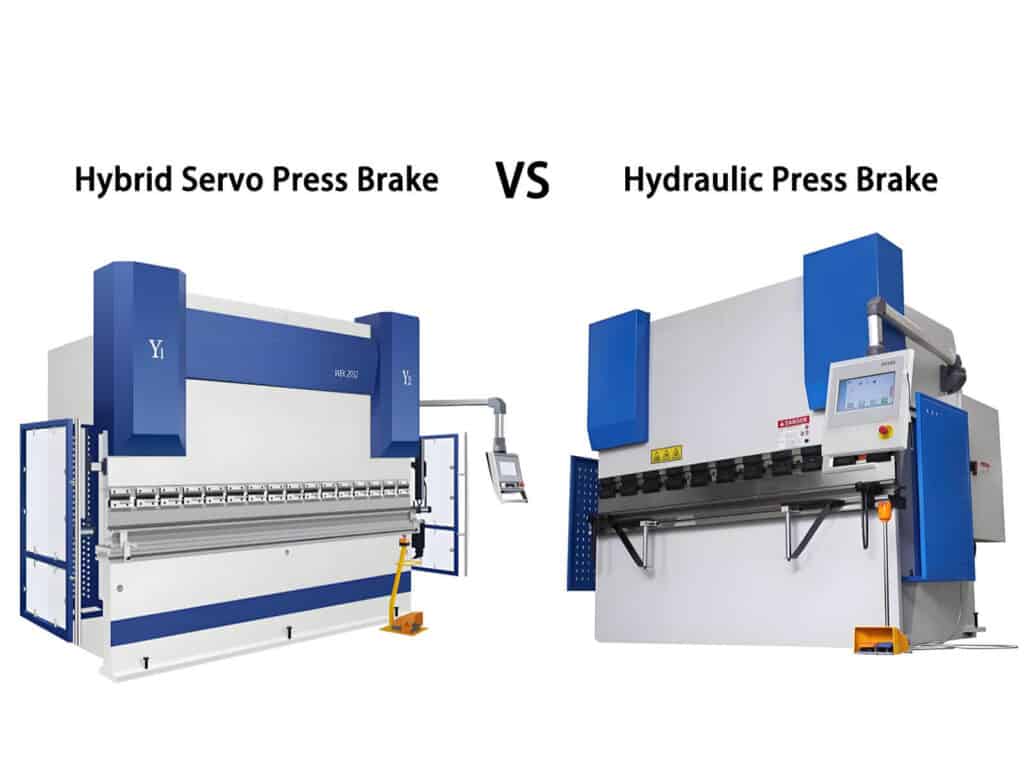
Hybrid Servo Press Brake vs Hydraulic Press Brake: Energy Use, Accuracy & ROI Compared
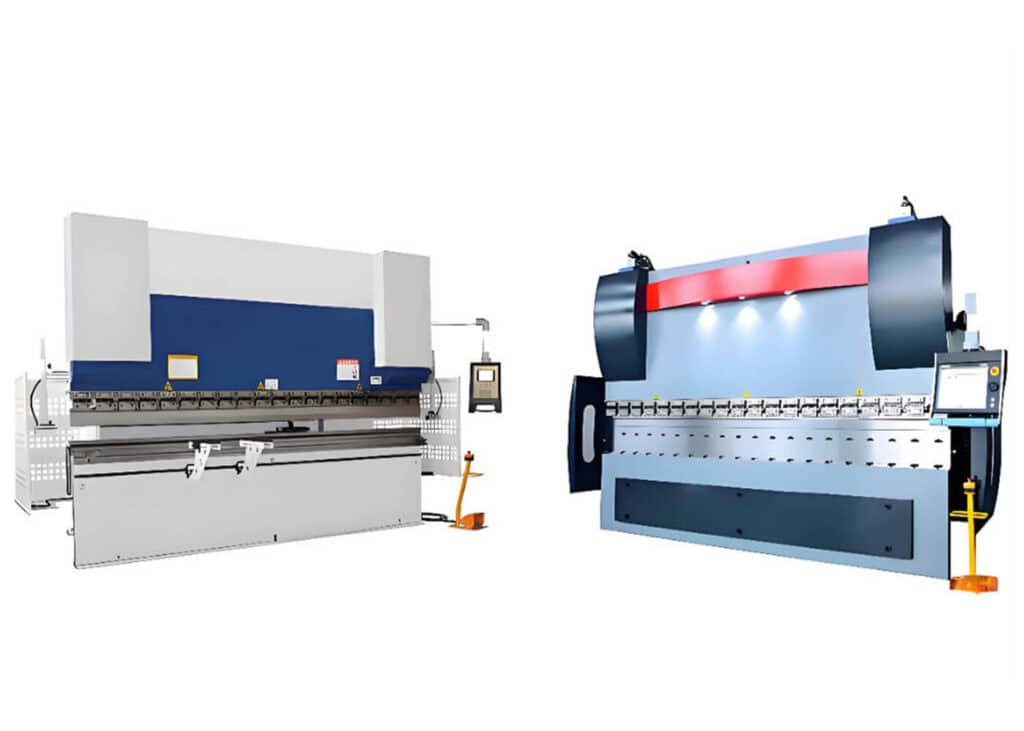
Electric vs Hydraulic Press Brake: Which Should You Buy? A Quick Decision Guide
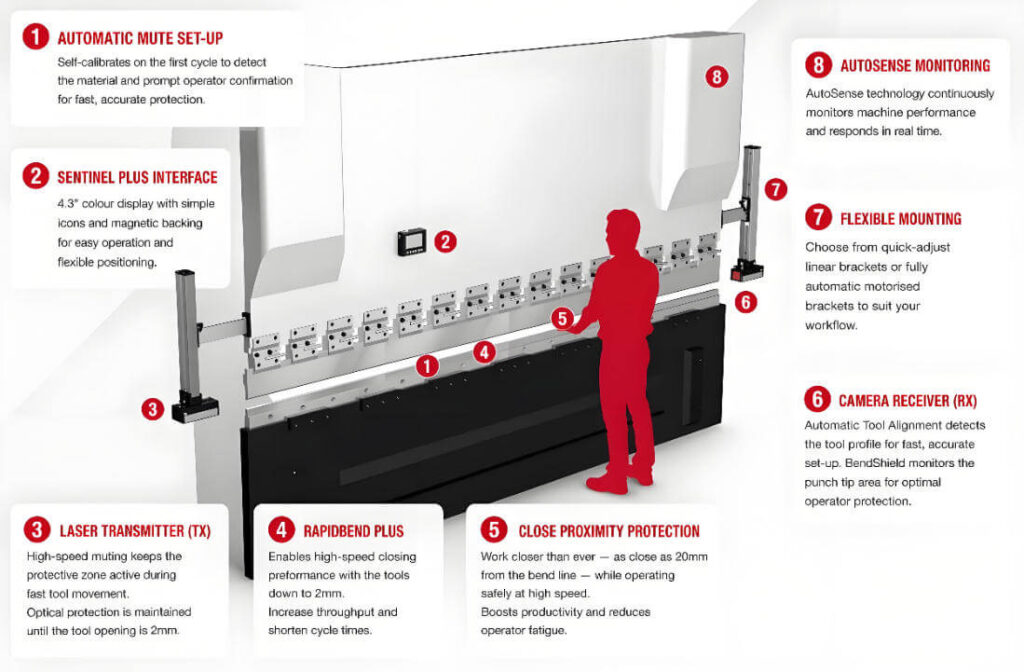
Press Brake Guarding Systems & Requirements: OSHA & ANSI Safety Guide
What Is a 3 Axis Press Brake? Complete Guide to Structure, Benefits & Selection
What is a 4 Axis Press Brake? Configuration, Advantages and Uses analysis
Post Your Review
Share Your Thoughts And Feelings With Others