


Francis Pan
Francis Pan is the Foreign Trade Manager of RAYMAX, with over 10 years of experience in sheet metal fabrication equipment and CNC machinery. He has worked closely with manufacturers worldwide on press brakes, fiber laser cutting machines, fiber laser welding machines, and practical production-oriented metal processing solutions.
Top Guidelines
-1024x768.jpg)
-1024x768.jpg)
-1024x768.jpg)
-1024x768.jpg)
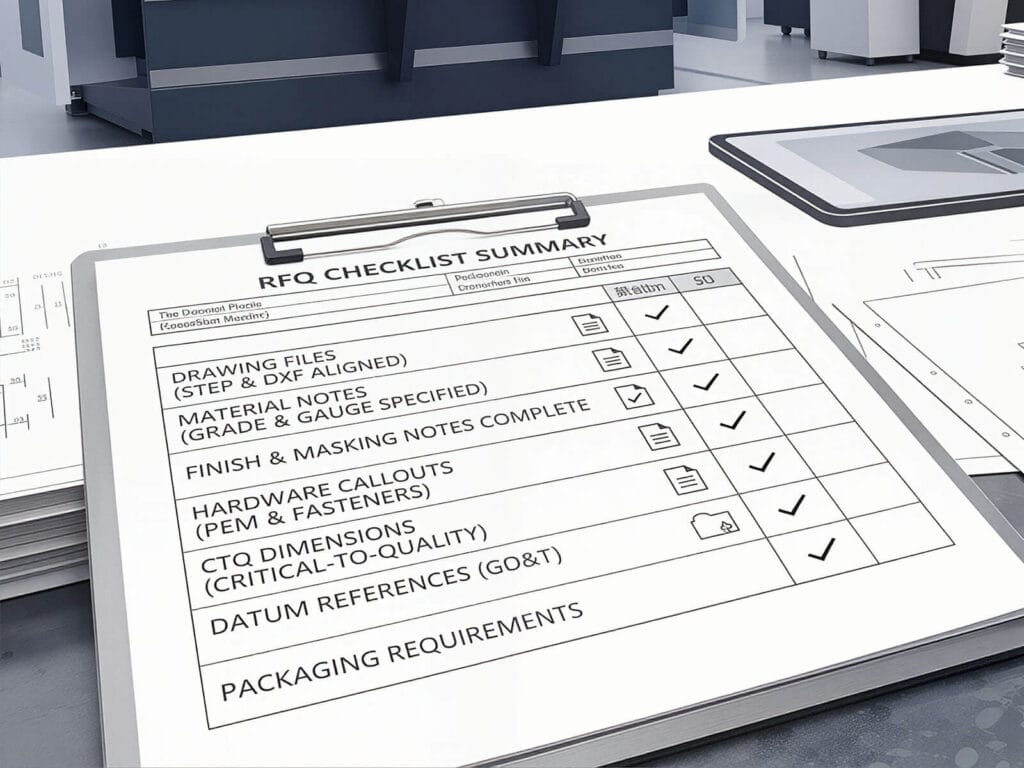
Table Of Contents
Stay in the the loop
Subscribe To Our Newsletter
Quick Answer
When selecting a press brake manufacturer, we should only use rankings as a preliminary reference. What truly matters during the selection process is whether the supplier can provide a suitable press brake configuration based on your material, sheet thickness, bend length, precision requirements, production capacity, and budget.
A reliable press brake manufacturer should be able to provide at least the following information:
This article compiles a list of press brake manufacturers worth watching and provides a supplier screening checklist, an RFQ parameter list, and a procurement red flag checklist to help you shift from “just looking at rankings” to “comparing configurations, verifying capabilities, and managing procurement risks.”
If you are comparing different press brake manufacturers, we recommend first clarifying your material type, sheet thickness, bending length, angle tolerance, production capacity, and automation requirements, then asking suppliers to provide configuration recommendations, based on your actual operating conditions.
Selection Criteria
When screening press brake manufacturers, this article primarily considers the following dimensions:
Data Sources:This ranking is primarily compiled based on brand recognition, product line coverage, bending technology expertise, automation capabilities, international market visibility, and value as a procurement reference. When making actual selections, the ranking should not be the sole basis for procurement; decisions should be made by considering workpiece parameters, configuration options, acceptance testing, and after-sales capabilities.
10 Questions to Confirm with Suppliers Before Purchasing a Press Brake:
|
Key questions to confirm |
How should a qualified supplier respond? |
Red flags |
|---|---|---|
|
What is the backgauge repeatability? Especially on the X-axis |
Be able to describe the testing methods, testing conditions, repeatability data, and acceptance criteria |
Provides only nominal values, without actual test data |
|
What method is used for crowning? |
Be able to specify whether the system is controlled manually, electrically, hydraulically, or via CNC, and describe the applicable operating conditions |
Mentioning “compensation functionality” without specifying the method |
|
What is the brand and model of the control system? What features does it support? |
Be able to specify the system model (e.g., Delem, ESA, Cybelec, or others) and describe its programming, compensation, and database functions. If you are comparing entry-level and CNC-controlled machines, our NC vs CNC press brake selection guide explains the differences in control logic, programming efficiency, repeatability, suitable applications, and long-term upgrade potential. |
Referring to a “CNC system” without detailing the model or features |
|
Which standards is the tooling system compatible with? Does it support quick clamping? |
Be able to specify whether the system complies with European-style, American-style, or other tooling standards, and describe the clamping system and tool change efficiency |
Failure to specify tooling standards, leading to unpredictable replacement costs |
|
Can you provide bending test or acceptance data for equipment with the same specifications? |
Be able to provide test data for sample parts under similar operating conditions |
Showing promotional videos without providing test standards |
|
How is the consistency of angles at the center and both ends of long workpieces controlled? |
Be able to explain the crowning scheme and acceptance methods |
Emphasizing tonnage without discussing crowning compensation methods |
|
How are after-sales support and spare parts guaranteed? |
Be able to specify the warranty period, remote support, spare parts supply, response time, and training methods |
Vague after-sales explanations with no specific commitments |
|
Is the quote broken down by configuration? |
List the costs separately for the main unit, control system, backgauge, tooling, clamping, safety configuration, shipping, and training |
Vague quotes that may lead to additional charges later |
|
Do you support on-site acceptance or trial bends? |
Be able to perform a trial bend or acceptance testing based on the customer’s material, sheet thickness, and drawings |
No acceptance testing is conducted; customers are only shown specification sheets |
|
Can you provide configuration recommendations based on the RFQ? |
Calculate the required tonnage, number of axes, tooling, and compensation configuration based on material, sheet thickness, length, workpiece structure, and production volume |
Quotes are based solely on the customer’s budget, not on actual operating conditions |
Before comparing supplier responses, buyers should first prepare a complete press brake RFQ with material, sheet thickness, bend length, drawings, tooling requirements, acceptance criteria, and production volume, so each manufacturer is quoting the same technical scope.
Key Factors in Selecting a Press Brake Manufacturer
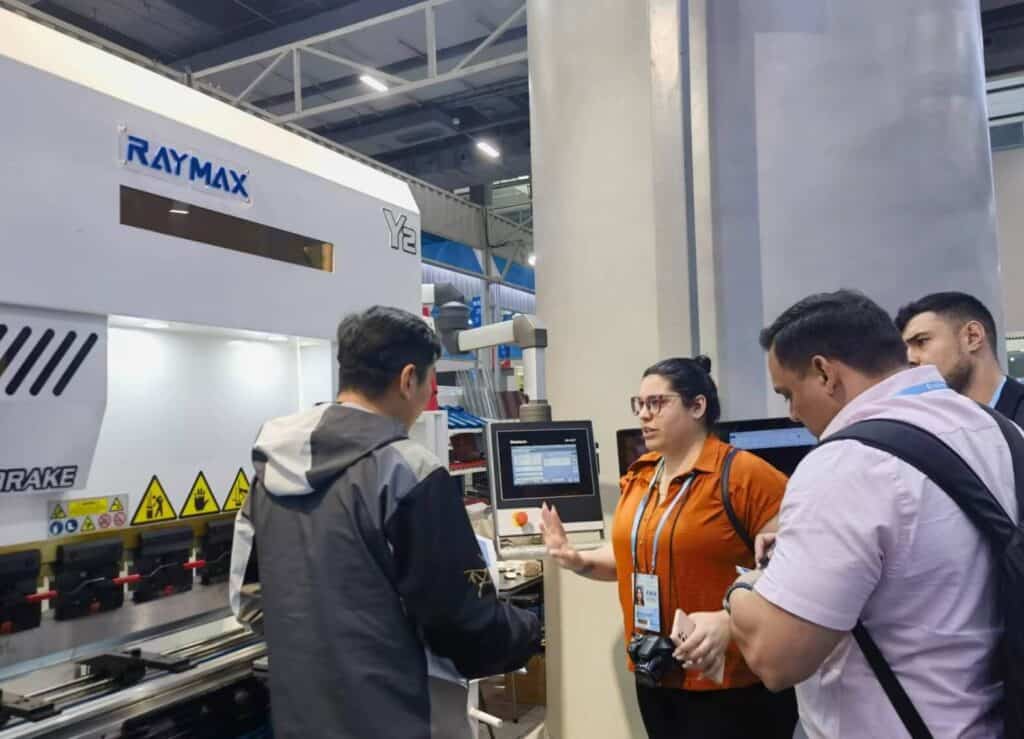
When selecting a press brake manufacturer, buyers should consider the following key factors:
Top 10 Press Brake Manufacturers
The following list is intended solely as a reference for the early stages of procurement, and does not represent an absolute ranking or assessment of quality. The final choice of brand should be based on a comprehensive evaluation of workpiece parameters, configuration options, acceptance testing, and after-sales capabilities.
1. Amada ( Japan )
Amada Corporation was founded in 1946 and is headquartered in Kanagawa, Japan. Purchasing costs are typically higher, but the company has gained widespread market recognition for the stability of its equipment, mature process systems, and reliable long-term service capabilities.
2. Bystronic ( Switzerland )
Bystronic was founded in 1964 in Niederönz, Switzerland. Purchasing just a single press brake may not be cost-effective, but if you aim to build a complete production line integrating cutting, bending, and supporting software, it is well worth considering.

3. TRUMPF ( Germany )
TRUMPF was founded in 1923 in Germany. High procurement costs; suitable for factories with ample budgets and clear automation goals.

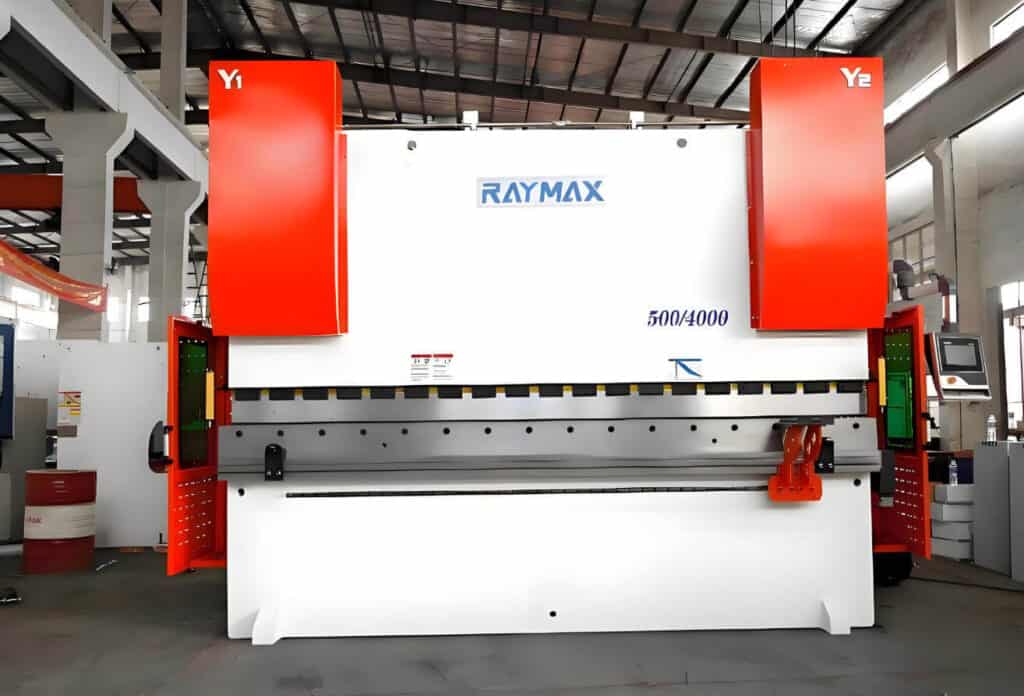
4. RAYMAX ( China )
RAYMAX was founded in 2002 in China and specializes in sheet metal processing machinery. Flexible configuration options, and fast delivery times. Suitable for factories with limited budgets, but high performance requirements, for key configurations.

5. ACCURL ( China )
ACCURL was founded in 2014 in Anhui, China. A Chinese supplier of export-oriented CNC press brakes, with a comprehensive range of configurations, suitable for buyers, who require mid-to-high-end specifications, without paying the premium prices of European brands.

6. Durma ( Turkey )
Durma was founded in 1956 and is headquartered in Bursa, Turkey. A leading Turkish sheet metal equipment manufacturer, suitable for companies requiring high-tonnage heavy-duty bending, but whose budgets fall short of purchasing top-tier European brands.

7. LVD ( Belgium )
LVD was founded in 1952 in Gullegem, Belgium. Its standout feature is its strength in process management software. Suitable for factories with complex structures, and a wide variety of products.

8. Haco ( Belgium )
HACO was founded in 1965 and is headquartered in Ardooie, Belgium, specializing in sheet metal and woodworking machinery. Offers more than just individual press brakes; ideal for companies requiring multiple machines, such as press brakes, shearing machines, and plate rolling machines.

9. Prima Power ( Italy )
Prima Power was founded in 1977 in Turin, Italy. Its strength lies in robust automation capabilities, making it suitable for companies seeking to integrate cutting, punching, bending, and logistics into a complete production line.

10. SafanDarley ( Netherlands )
SafanDarley was formed in 2012 through the merger of Safan and Darley, two Dutch sheet metal machinery brands known for servo-electric press brake technology, suitable for companies seeking all-electric drive systems, reduced maintenance, and a cleaner shop environment. However, for applications involving thick plates and high tonnage, the equipment’s capabilities must be verified in advance.

How to Choose the Right Press Brake Manufacturer?
Different buyers prioritize different types of press brake manufacturers. Some focus more on hydraulic press brake manufacturers, others on electric press brake manufacturers, and still others on CNC press brake exporters with international experience. If you are still deciding between drive systems, this electric vs hydraulic press brake comparison can help you understand the differences in power consumption, maintenance, bending capacity, application range, and long-term operating cost.
Before sending a request for quotation to suppliers, prepare this list of specifications:
|
Parameter types |
Specific details |
|---|---|
|
Workpiece and material parameters |
Material type |
|
Material thickness range |
|
|
Maximum bending length |
|
|
Typical bend angles and inner radius requirements |
|
|
Minimum flange height |
|
|
Are there deep flanges, box-shaped parts, or asymmetrical parts? |
|
|
Accuracy and process parameters |
Angle tolerance requirements |
|
Flange dimension tolerance requirements |
|
|
Requirements for length consistency of long workpieces |
|
|
Is closed-loop angle measurement required? |
|
|
Production and configuration parameters |
Daily or monthly production targets |
|
Batch size |
|
|
Changeover frequency |
|
|
Is multi-station positioning required? |
|
|
Is integration with automated loading/unloading planned? |
|
|
Control and compatibility parameters |
Preferred control system brand |
|
Existing tooling standards |
|
|
Is MES/ERP integration required? |
|
|
Delivery and service parameters |
Delivery lead time requirements |
|
Installation and commissioning location |
|
|
After-sales service response requirements |
|
|
Budget range |
Organizing this list of specifications and sending it to the supplier, will help them better understand your processing requirements, and reduce the cost of back-and-forth communication. For a more detailed step-by-step purchasing process, you can also read our complete press brake buyer’s guide, which explains how to compare machine configurations, supplier quotations, acceptance terms, tooling requirements, and long-term service support before placing an order.
If you have already defined your processing requirements, please send us the material, sheet thickness, bending length, angle tolerance, and production volume. RAYMAX engineers can then provide reasonable configuration recommendations and a quote based on your actual operating conditions.
Red flags to watch for when purchasing a press brake:
|
Red flags |
Why is it risky? |
What should the buyer do? |
|---|---|---|
|
Discusses only tonnage and price, without mentioning the workpiece |
Equipment may not be suitable for actual operating conditions |
Provide RFQ specifications and ask suppliers to recommend suitable configurations |
|
Does not specify the number of backgauge axes or repeatability |
Affects flange dimensions and the precision of multiple bends |
Request that suppliers specify the functions and repeatability data for the X, R, Z, and Y axes |
|
Does not specify the method of crowning |
Long workpieces are prone to angle discrepancies between the center and both ends |
Request that suppliers specify whether crowning is manual, electric, hydraulic, or CNC-controlled |
|
Vague regarding the brand and model of the control system |
High risks associated with subsequent programming, maintenance, and expansion |
Clarify the control system model and core functions |
|
Unclear tooling standards |
High costs for subsequent tool change |
Confirm whether the tooling standard is European-style, American-style, or custom |
|
After-sales service is described only as “lifetime service” |
No guidance on how to provide support or resolve issues in practice |
Have the supplier specify the warranty period, spare parts, remote support, and response time |
|
Quotes do not break down the configuration |
Prone to additional costs later on |
Request separate quotes for the main unit, tools, controls, clamping, transportation, and training |
|
Refuses machine trials or sample verification |
Actual machining capabilities cannot be verified |
Require the supplier to provide trial bend videos, sample testing, or acceptance criteria |
|
Unable to specify the brands of core components |
High risks associated with future maintenance and replacement |
Require the supplier to list key electrical, hydraulic, and control components |
|
Unable to provide English documentation or training support |
Difficulties with cross-border procurement |
Require confirmation of language support for manuals, user interfaces, training, and after-sales support |
Key Factors to Consider When Selecting a Press Brake:
Common Pitfalls and How to Avoid Them
Solutions:
We recommend asking suppliers the following questions during the purchasing process:
Press Brake Procurement Trends: Automation, Accuracy Compensation, and Digitalization
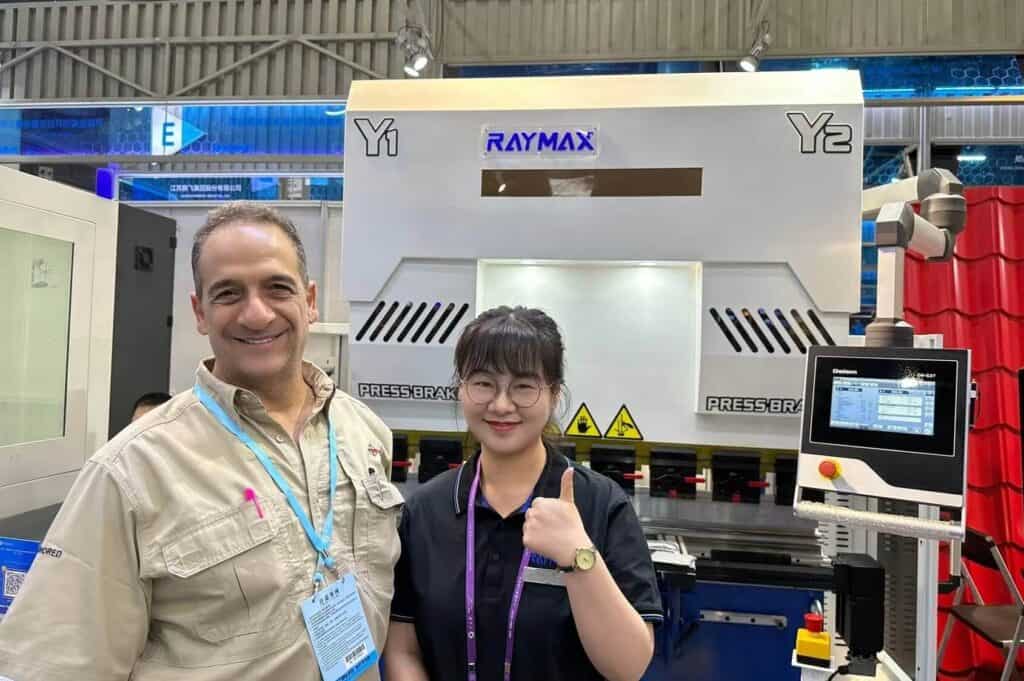
In recent years, many sheet metal factories are increasingly focusing on automated integration, graphical programming, material databases, angle compensation, energy-efficient drive systems, and remote service capabilities. However, when actually making a purchase, we must not simply follow trends blindly; instead, we must verify whether these features can be effectively implemented in specific configurations, acceptance criteria, and after-sales support.
At the same time, many factories also place greater emphasis on factors such as delivery lead times, spare parts availability, operator training, energy consumption costs, and cross-border after-sales support capabilities during the procurement process.
For manufacturers, true competitive strength does not lie in attracting buyers’ attention by promoting “intelligence” or “automation,” but rather in ensuring that these features operate stably in subsequent production, with clear pricing, strict acceptance criteria, and the ability to provide buyers with long-term, reliable service.
Conclusion
The above list can serve as a preliminary reference, for selecting a press brake manufacturer, but the ranking should not be directly equated with procurement priority. True procurement decisions cannot rely solely on brand rankings; buyers must also make a comprehensive assessment, based on material types, sheet thickness ranges, maximum bending length, angle tolerances, production cycle times, backgauge configurations, crowning methods, press brake control systems, and after-sales support capabilities.
If you are evaluating press brake suppliers, we recommend first organizing your workpiece drawings, and processing parameters, then asking manufacturers to provide configuration recommendations, based on actual operating conditions. RAYMAX can help determine the appropriate press brake configuration, based on your material, sheet thickness, bending length, precision requirements, and production volume needs.
You can view our press brake configuration solutions, or submit your RFQ parameters, to receive more specific selection recommendations.
Ready To Upgrade Your Metal Fabrication Line?
Email Us For A Free Consultation.
FAQ
Related Blog
Press Brake Tooling Compatibility Guide: Punch & Die Standards, Segmented Tools & Clamping Fit
Press Brake Price Guide 2026: Cost Factors, Options & Accurate Quotes
Tooling & Clamping for High-Mix Production: Quick Clamp vs Hydraulic Clamp vs Manual Clamp ROI
Press Brake FAT/SAT Acceptance Checklist: Accuracy Tests, Tolerance & Documentation
Press Brake RFQ Checklist: 14 Fields You Must Provide for an Accurate Quote
-1024x768.jpg)
Press Brake Crowning Troubleshooting: Fix Uneven Bend Angles Across Long Parts
-1024x768.jpg)
Press Brake Tonnage Comparison: Air Bending vs Bottoming vs Coining (How Force Changes + Safety Margin)
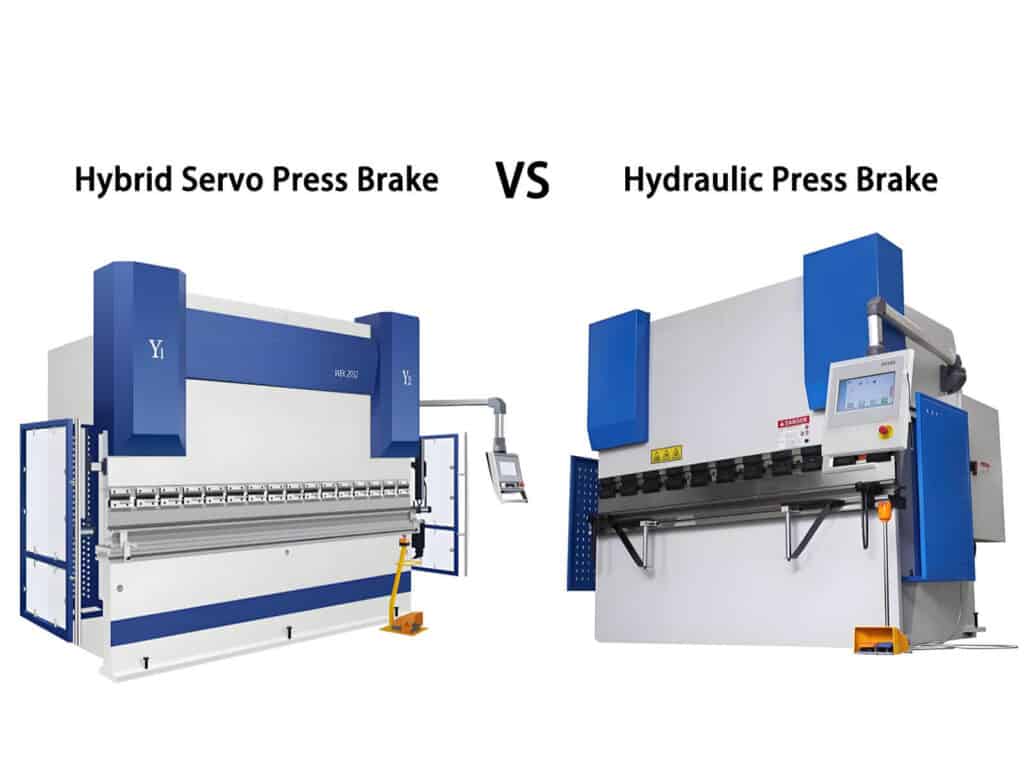
Hybrid Servo Press Brake vs Hydraulic Press Brake: Energy Use, Accuracy & ROI Compared
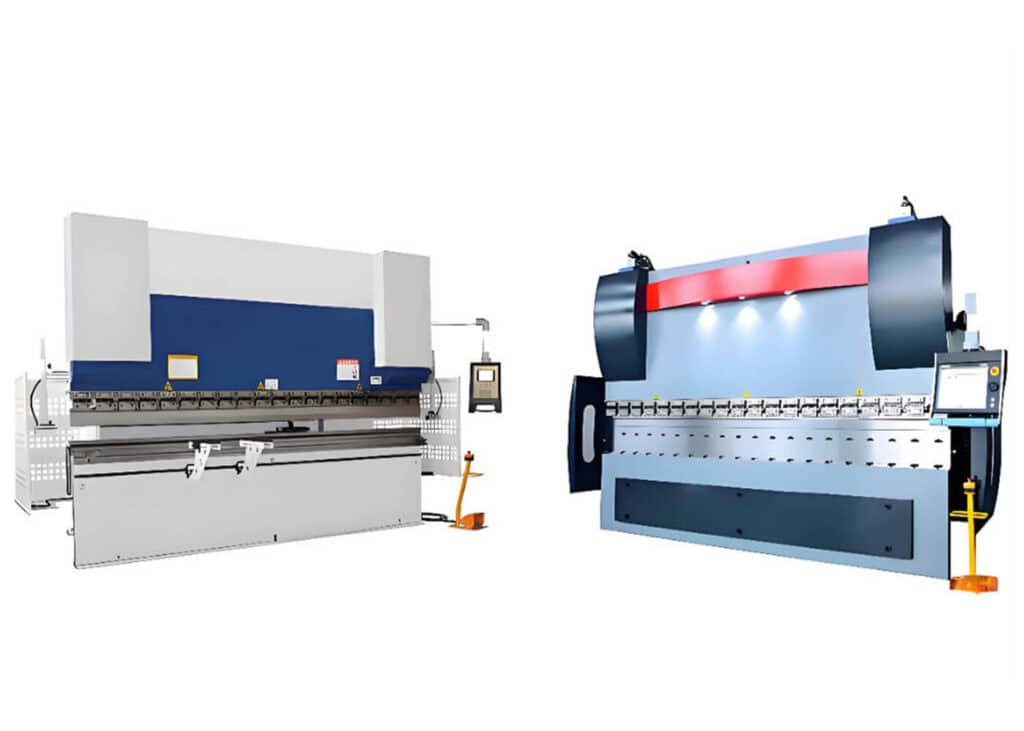
Electric vs Hydraulic Press Brake: Which Should You Buy? A Quick Decision Guide
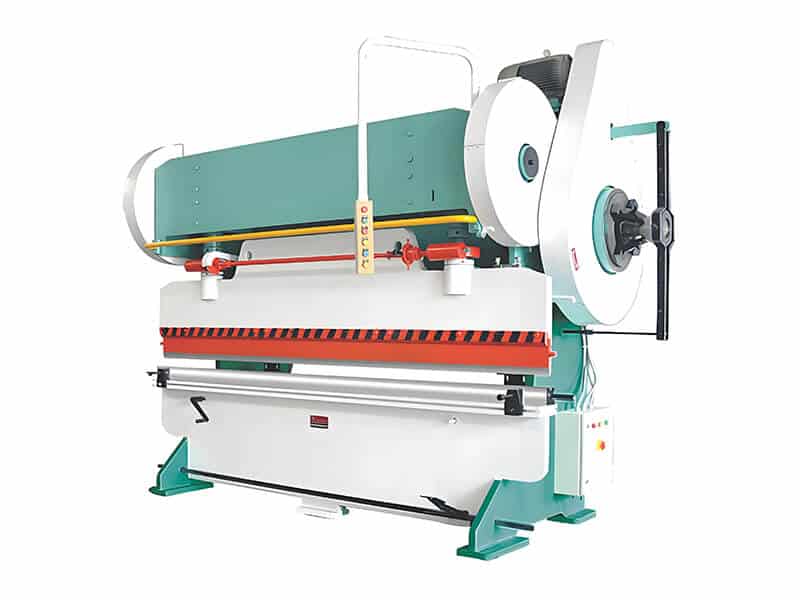
Pneumatic Press Brake: Complete Guide, Advantages, Applications & Buying Tips
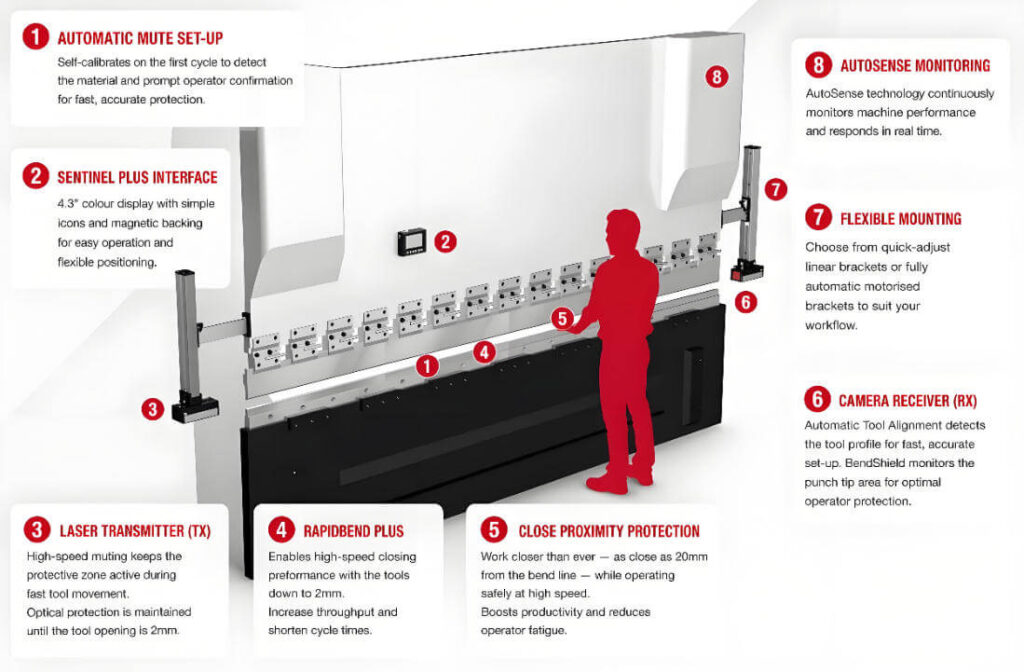
Press Brake Guarding Systems & Requirements: OSHA & ANSI Safety Guide
What Is a 3 Axis Press Brake? Complete Guide to Structure, Benefits & Selection
Post Your Review
Share Your Thoughts And Feelings With Others