

Introduction
In today’s sheet metal processing industry, manufacturers increasingly demand consistent bending accuracy, lower energy costs, and higher automation. As a result, press brake drive and control systems are evolving.
In sheet metal fabrication, both hydraulic and hybrid servo press brakes are widely used. Conventional hydraulic press brakes are mature, stable, and durable with a wide range of applications. Hybrid servo press brakes use on-demand pump operation, which often reduces background noise and helps keep oil temperature more stable. Both types of press brakes have their own advantages, and many factories often hesitate between the two when purchasing.
This article will explain the working principles, core comparison table, key differences breakdown, press brake buyers guide, ROI calculation, and FAQs / common questions of two types of press brakes, take you step by step to understand these two types of press brakes, and provide you with selection ideas. It will also provide you with a data list that can be used for inquiry and scheme evaluation.
Quick conclusion
When to prioritize Hybrid Servo
When to prioritize Hydraulic
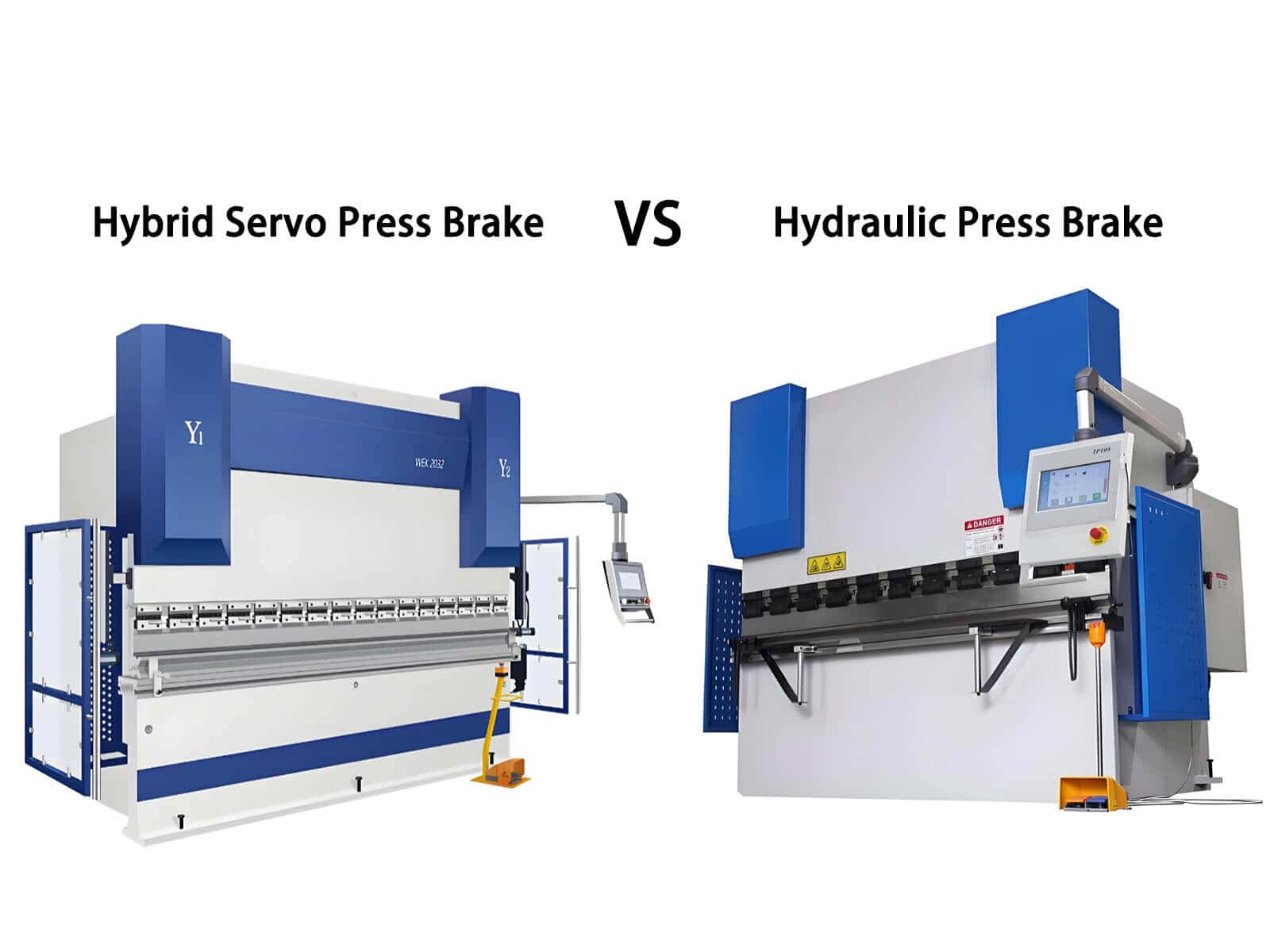
Definitions (to avoid confusion)
What is a hydraulic press brake
Definition: It refers to a press brake that is mainly driven by conventional hydraulics for bending.
Typical features: An electric motor and hydraulic power unit provide hydraulic power. The ram performs approach, bending (pressing), and return through valve control and hydraulic cylinders.
Key note: Hydraulic press brakes on the market can be controlled by either NC or CNC. The number of axes controlled by CNC (such as 2 axes, 3+1 axes, 4+1 axes, 6+1 axes, etc.) determines the level of control and automation of the equipment, regardless of whether it is hybrid or not.
What is Hybrid Servo press brake
Definition: It refers to a press brake that adopts the mainstream “servo-pump-driven electro-hydraulic” system. The servo motor drives the hydraulic pump to supply oil only when motion is needed, and it usually does not need to run continuously during idle time and non-productive movement.
Compatible search criteria: Many users search for “Hybrid Press Brake” when searching. To avoid generalization, the Hybrid Servo press brake in this article defaults to the mainstream servo-pump-driven electro-hydraulic solution.
Typical feature: It drives the oil pump through a servo motor, and its biggest feature is that the servo motor can only operate when the system needs to supply oil to the oil cylinder and start the bending action, that is, “on-demand pump operation”. When no pressure is needed, it does not need to work continuously, and standby energy consumption is significantly reduced.
Comparison Table of Hybrid vs Hydraulic Core
|
Comparison item |
Hybrid servo press brake |
Conventional hydraulic press brake |
|---|---|---|
|
Pump drive logic |
Servo-pump-driven, on-demand pump operation (the pump runs when motion/pressure is needed) |
The pump often runs continuously or cycles at idle |
|
Standby energy consumption performance |
Usually lower |
Continuous energy consumption may occur during standby or idle mode |
|
High utilization production energy consumption performance |
The energy-saving range depends on the standby time ratio and production cycle time |
Under high utilization, the difference in energy consumption may be reduced |
|
Noise level |
The pump typically doesn’t run continuously at idle, so background noise is often lower |
When operating continuously, it is usually noisy |
|
Oil temperature stability and heating trend |
Less heat load and more stable oil temperature |
Pay more attention to temperature control, high temperature needs to be managed |
|
Cooling demand trend |
Low cooling demand |
More dependent on cooling and oil temperature management |
|
Cycle time & throughput |
More suitable for scenarios with short stroke, frequent start-stop, and multiple model changes |
More suitable for stable operation, mature heavy-duty, and long stroke working conditions |
|
Response and Control Stability |
Easier to optimize frequent start/stop in short-stroke work |
More dependent on system configuration, high-end is equally fast and stable |
|
What are the main factors determining accuracy and repeatability |
Oil temperature, deflection compensation, synchronous control, angle measurement and compensation, CNC axis configuration of back gauge, tooling accuracy and process parameters, material variation and springback, etc |
Oil temperature, deflection compensation, synchronous control, angle measurement and compensation, CNC axis configuration of back gauge, tooling accuracy and process parameters, material variation and springback, etc |
|
Maintenance workload and downtime maintenance trend |
Low maintenance frequency |
Regular maintenance is required for routine oil filtration/sealing/cooling maintenance |
|
Trend of oil life and oil change cycle |
Temperature control is more stable, and the lifespan of the oil is usually longer |
More dependent on oil temperature and maintenance |
|
Trend of automation/robot bending adaptability |
Automation units that are usually more suitable for long-term stable operation |
Automation can also be done, but more attention should be paid to heat and energy consumption |
|
Initial procurement cost |
Initial high, long-term look at electricity price duty cycle |
Low initial, long-term focus on energy consumption and temperature control |
|
Total Cost of Ownership (TCO) and Long Term Cost Structure |
The initial procurement cost is higher, and the later operation and maintenance costs are lower |
The initial procurement cost is lower, while the later operation and maintenance costs are higher |
Key Differences Explained (Hybrid vs Hydraulic)
Energy Efficiency
Oil Temperature and Stability
Noise and Workshop Experience
Speed and Productivity
Accuracy and repeatability
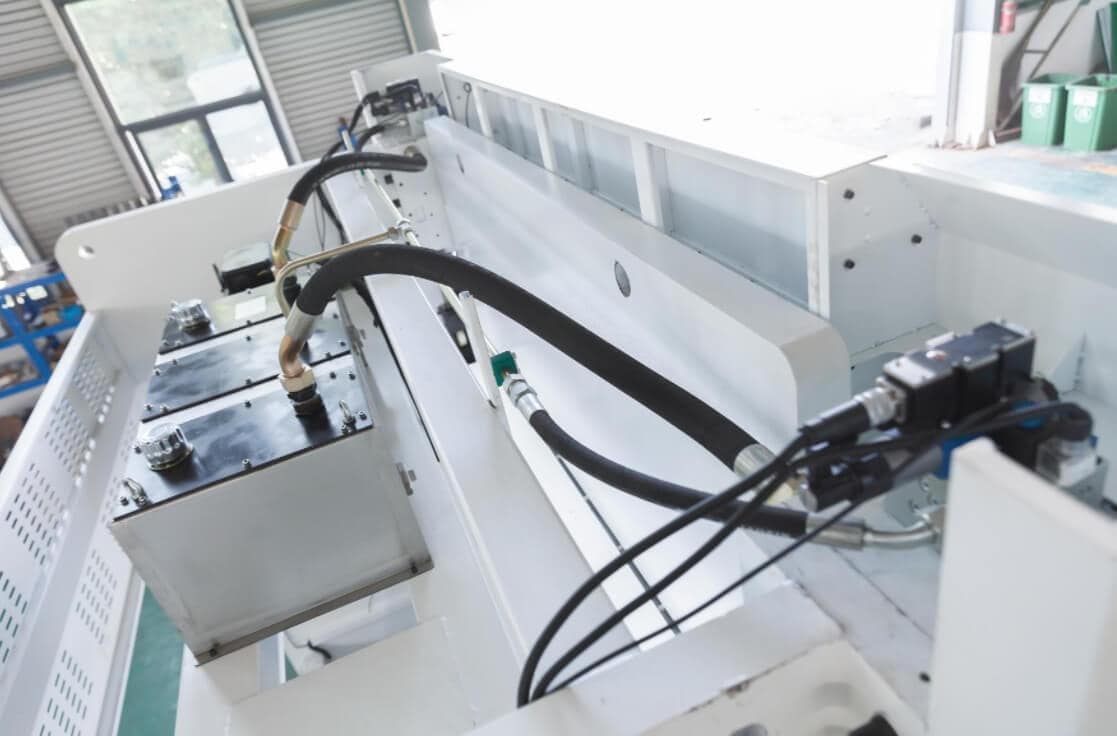
Whether it is a conventional hydraulic press brake or a hybrid servo press brake, the key to their bending accuracy lies in deflection compensation, synchronous control, angle measurement and compensation, axis configuration of the back gauge, tooling accuracy and process parameters, material variation and springback, etc. The hybrid servo press brake may have better long-term consistency in accuracy due to its more stable oil temperature control and faster response speed.
Maintenance Requirements
Application and Applicability
Cost considerations
Example of Cost Segmentation:
We can take hydraulic press brakes and hybrid servo press brakes of equal tonnage as examples:
Firstly, let’s take a look at the initial cost:
|
Hydraulic press brake |
Lower |
|
Hybrid servo press brake |
Higher |
Secondly, look at the annual energy cost:
|
Hydraulic press brake |
Higher |
|
Hybrid servo press brake |
Lower |
Then, let’s take a look at the annual maintenance cost:
|
Hydraulic press brake |
Higher |
|
Hybrid servo press brake |
Lower |
Finally, we can derive the total cost of ownership:
|
Hydraulic press brake |
The longer the time, the relatively higher the total cost of ownership |
|
Hybrid servo press brake |
The longer the time, the lower the total cost of ownership |
Selection Guide
When to choose traditional hydraulic
When to choose hybrid servo
How to choose thick plate/large tonnage/long machine
For the bending of thick plates/large tonnage/long workpieces, we cannot easily conclude that only hydraulic press brakes are suitable and not hybrid servo press brakes. Many hybrid servo hydraulic press brakes on the market also have the process of large tonnage bending. How to make a specific selection depends on multiple factors, such as tonnage, bending length, opening height, stroke, frame rigidity, shaft configuration, tooling and process, etc.
Application Case Analysis
Here are two typical cases:
Case A: A certain factory mainly processes thin plate stainless steel materials, with a wide variety of types, frequent changeover, and high requirements for the accuracy and consistency of workpieces. In this working condition, a hybrid servo press brake is a suitable choice.
Case B: A certain factory usually processes thick plate carbon steel materials in large quantities. The equipment needs to operate at full load for a long time, and the local electricity bill is relatively low. In this case, choosing a hydraulic press brake is more suitable.
If you have a plan to purchase a press brake, but cannot make a decision on whether to choose a hydraulic press brake or a hybrid servo press brake, I suggest that you can send us the materials, thickness range, bending length, and expected cycle time that your factory mainly processes. We can provide you with a more reliable selection recommendation and quote.
How to estimate ROI return on investment
A Simple Calculation Framework
Simplified Formula
Annual electricity cost difference ≈ (average power of traditional scheme – average power of hybrid servo) x annual operating hours x electricity price
Return cycle ≈ Equipment price difference ÷ (estimated annual electricity cost savings+annual maintenance/downtime cost savings)
CTA
If you need a more detailed ROI cost estimation list, we suggest that you provide us with your information such as electricity price, frequency, standby time ratio, material/thickness range, bending length, accuracy requirements, and whether there is an upgrade automation plan. We will conduct professional energy-saving and TCO calculations for you, and provide you with model configuration suggestions and detailed quotations.
Recommended Raymax models
|
Recommended models |
Advantage |
|---|---|
|
Entry level/budget oriented, cost-effective, suitable for regular bending needs |
|
|
Universal CNC, high precision and efficiency |
|
|
More suitable for bending complex precision parts, capable of achieving higher automation |
|
|
High end model. More energy-efficient, better noise reduction effect, and more stable oil temperature control |
|
|
Suitable for thin plate and high-frequency bending, with fast response speed |
|
|
Suitable for bending ultra long pieces |
Conclusion
Hydraulic press brakes and hybrid servo press brakes each have their own advantages. Hydraulic press brakes have strong bending force, mature and reliable, and are widely used in heavy-duty bending; The hybrid servo press brake can achieve on-demand pump operation, save energy consumption, high precision, and high efficiency, suitable for bending occasions with frequent changeover and long standby time.
If you are unsure which model is more suitable for your production line, you can send us your material type, thickness range, bending length, and daily production hours. The Raymax team will calculate your energy savings and total cost of ownership, and recommend suitable tonnage and axis configuration for you. Welcome to click below to contact us for free customized solutions and quotes.
Ready To Upgrade Your Metal Fabrication Line?
Email Us For A Free Consultation.
Frequently Asked Questions (FAQs)
Related Blog
Electric vs Hydraulic Press Brake: Which Should You Buy? A Quick Decision Guide
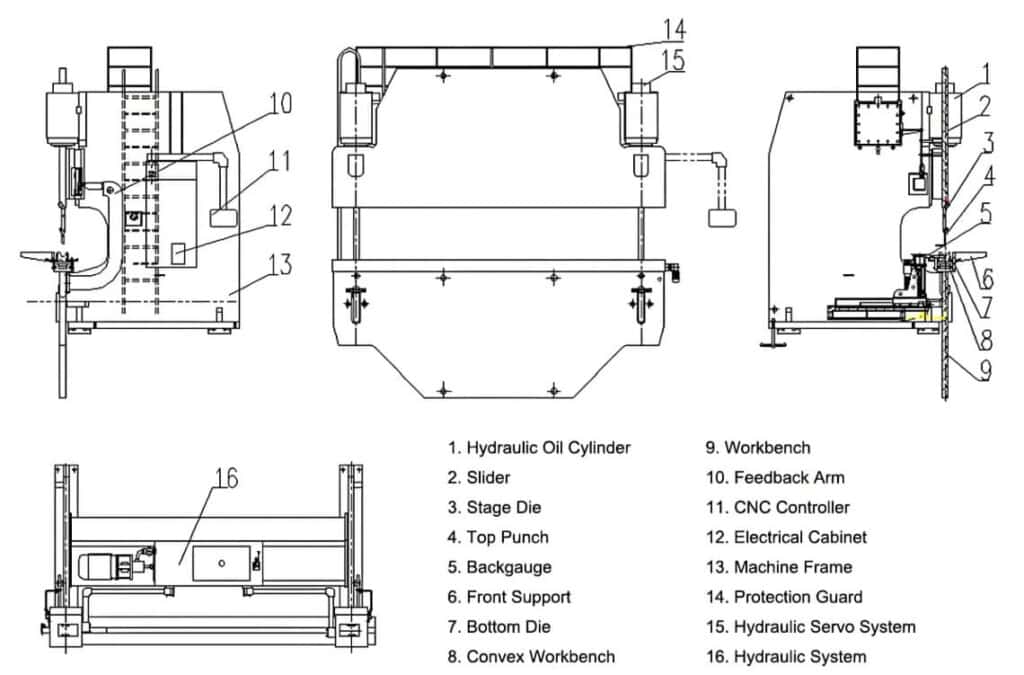
Master the Machine: Full Press Brake Structural Components Guide

Ultimate Guide to Hydraulic Press Brake Maintenance: Top Tools, Schedules & Expert Tips
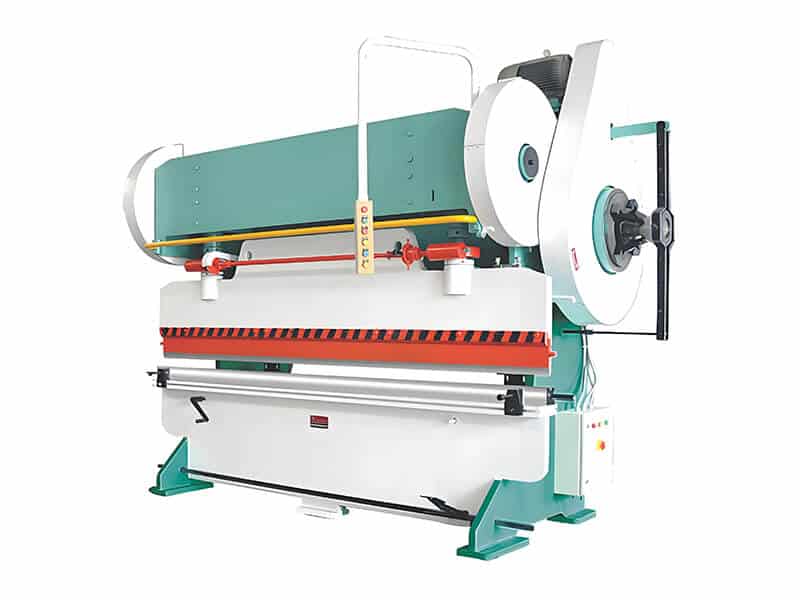
Pneumatic Press Brake: Complete Guide, Advantages, Applications & Buying Tips
Top 10 Press Brake Manufacturers: How to Choose the Right Supplier
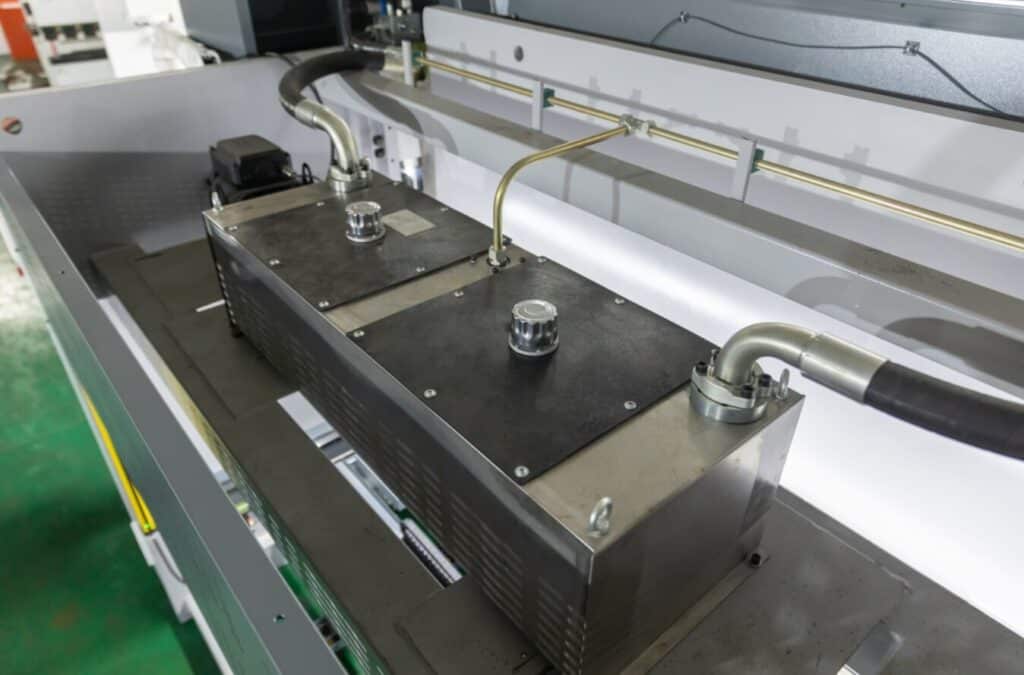
The Heart of Every Press Brake: Select, Maintenance & Upgrade Hydraulic Cylinders
Press Brake Buyers Guide: Expert Tips to Select, Compare, and Buy with Confidence
Hydraulic Press Brake Troubleshooting: The Ultimate Guide to Fix Common Problems
One-Stop Guide to Hydraulic Press Brake: Working Principle, Bending Process & Applications
-1024x768.jpg)
Press Brake Price Guide 2026: Cost Factors, Options & Accurate Quotes
Definition, working principle and selection guide of hybrid press brake
Post Your Review
Share Your Thoughts And Feelings With Others

Francis Pan
Francis Pan is the Foreign Trade Manager of RAYMAX, with over 10 years of experience in sheet metal fabrication equipment and CNC machinery. He has worked closely with manufacturers worldwide on press brakes, fiber laser cutting machines, fiber laser welding machines, and practical production-oriented metal processing solutions.
Top Guidelines
-1024x768.jpg)
-1024x768.jpg)
-1024x768.jpg)
Table Of Contents
Stay in the the loop
Subscribe To Our Newsletter