


Francis Pan
Francis Pan is the Foreign Trade Manager of RAYMAX, with over 10 years of experience in sheet metal fabrication equipment and CNC machinery. He has worked closely with manufacturers worldwide on press brakes, fiber laser cutting machines, fiber laser welding machines, and practical production-oriented metal processing solutions.
Top Guidelines
-1024x768.jpg)
-1024x768.jpg)
-1024x768.jpg)
-1024x768.jpg)
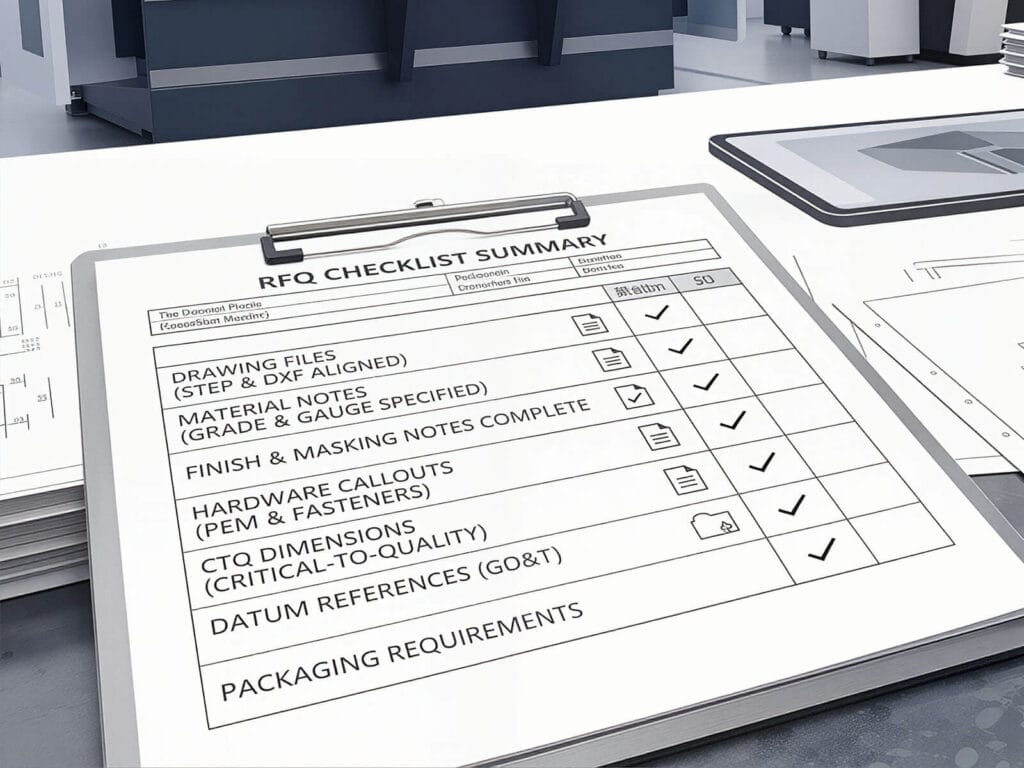
Table Of Contents
Stay in the the loop
Subscribe To Our Newsletter
Introduction
With the upgrading of buildings, developers have increasingly higher requirements for the appearance and quality of elevators. Metal processing companies must ensure the perfection of elevator panel appearance, the quality and consistency of bending, and keep up with tight production schedules. Therefore, for many elevator panel processing companies, ensuring the efficiency, precision, and aesthetics of elevator panel bending is crucial.
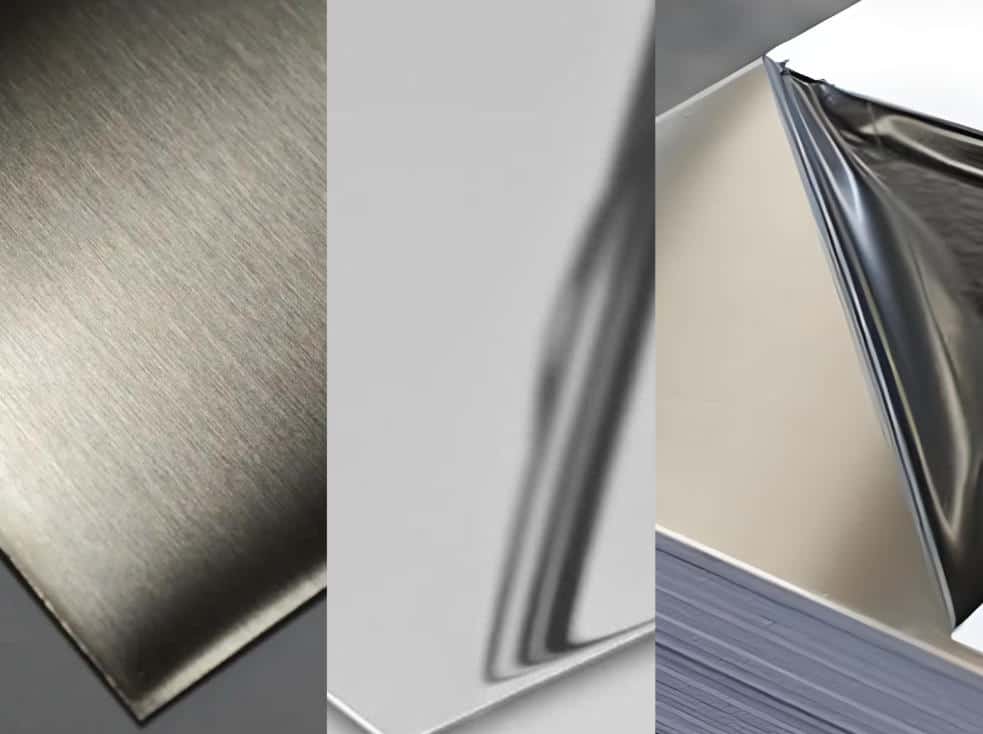
Elevator panel bending presents many challenges. The main materials processed are mostly long and thin plates, requiring high standards of straightness and angle consistency. Furthermore, brushed, mirror-finished, and film-protected stainless steel (with protective film) panels are easily scratched during processing, leading to rework or outright scrap. Therefore, the bending requirements for elevator panels are extremely stringent.
This article will provide a detailed introduction to the components of an elevator panel, the main challenges in bending elevator panels, corresponding solutions, and how to select the most suitable press brake for elevator panels during procurement, helping you obtain an accurate quote.
In the elevator industry, what panels are referred to as “Elevator Panels”?
Common Parts List
Typical materials and surface types
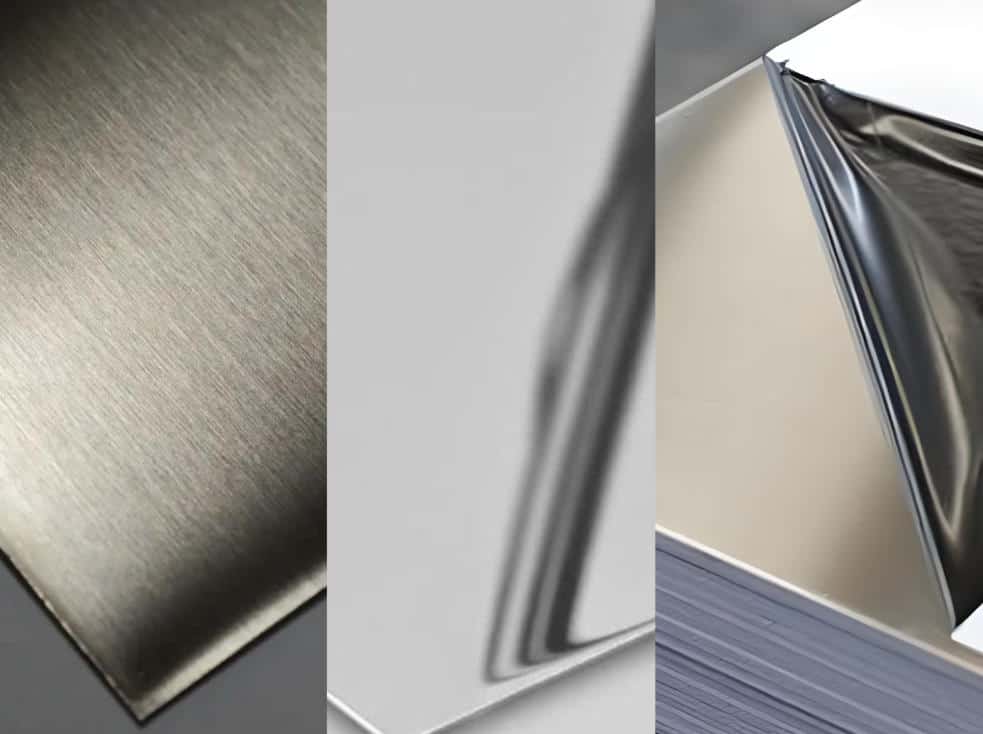
Elevator panels are typically made of stainless steel, but may also include some cold-rolled steel sheets. They mainly come in the following surface types:
Typical size characteristics
Elevator panels are characterized by being both long and thin. The length of the door panel and car wall can typically reach 2.1 to 2.5 meters, and some custom-made super-high elevators may even exceed 3 meters; the thickness of the panel is generally between 1 mm and 2 mm.
Why are “long, thin plates more difficult to stabilize”?
First, long, thin panels will sag due to gravity if not supported by hand. Second, when bending long panels, the press brake may cause elastic deformation under force. Because of this property of the panel, it is easy for it to deflect during the bending process, resulting in inconsistent angles in the middle and at both ends.
What are the key quality indicators for elevator panel bending?
Angular consistency and repeatability
Under the same program and tooling setup, whether within the same batch or across batches, the repeatability accuracy must be maintained as consistently as possible. In other words, the angle of a panel from left to right must remain consistent; any deviation may lead to misalignment of the door seams during assembly.
Zero scratches/zero indentations
Zero scratches/zero indentations are the primary indicator of a panel’s appearance. As mentioned above, there are three surface types for elevator panels. Brushed stainless steel and mirror stainless steel are extremely sensitive to scratches and indentations; once they appear, they may be irreparable. Generally, indentations are caused by the V-shaped edge of the press brake’s lower die, or scratches caused by workers dragging the sheet metal.
Straightness/Parallelism
This indicator is more sensitive for long door panels. It requires that after bending, the edges of the long door panel must maintain a consistent straight shape and must not be bent. Otherwise, after installation, problems such as light shining through the gap between the two doors or difficulty in opening and closing may occur.
Assembly clearance and edge stability
Elevator panels are typically shaped with Z-shaped folds or edging. When the edges of the elevator panel are spliced with other components, it is important to ensure that the dimensions of these shaped edges are very precise; otherwise, problems such as failure to splice or loosening may occur.
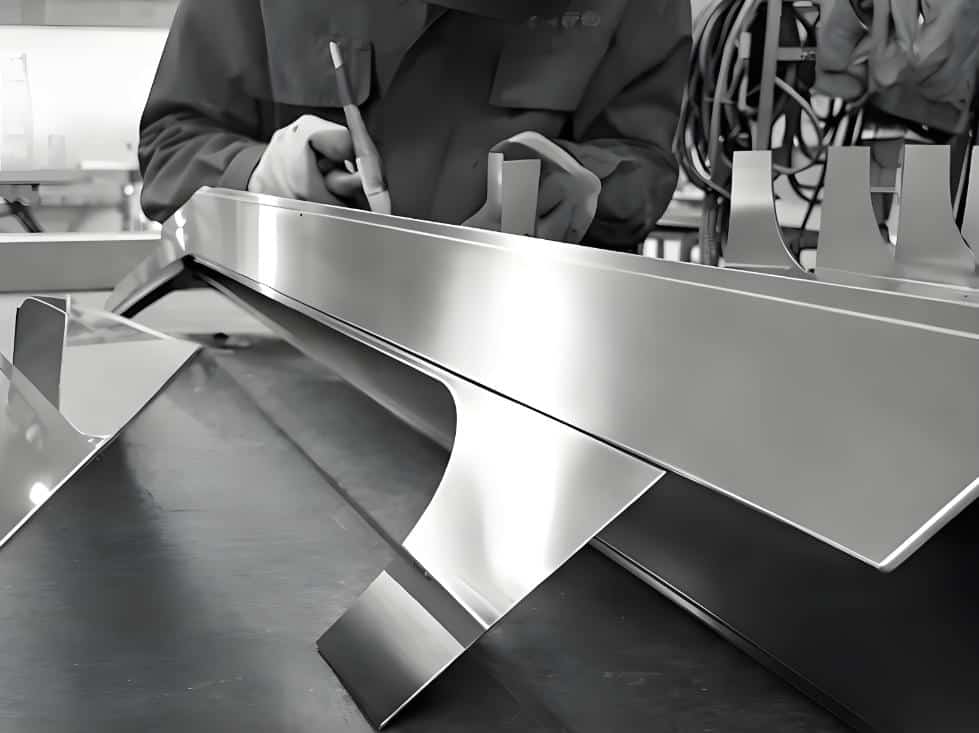
Typical process route and common bending shapes for elevator panels
Process route
The bending of elevator panels typically involves the following steps: blanking & hole-making → deburring → cleaning → bending → visual inspection → assembly/packaging.
Typical shape
Sequential principle of multiple bends
Multi-pass bending typically follows the principle of “inside before outside, small before large.” “Inside” and “outside” refer to the inner and outer sides of the panel, while “small” and “large” refer to the short and long sides. In other words, starting from the center of the inner side, bend the shorter inner side first, then the longer outer side. This prevents the already bent edges from hitting the frame or tooling during flipping, and also reduces accumulated dimensional errors.
Six common pitfalls in elevator panel bending (that often cause defects, rework, or scrap)
Scratches/Indentations
Canoe effect / inconsistent angles along length
When bending long plates, it’s easy for the angles in the middle and on both sides to become inconsistent; this is called deflection deformation. This is because when a press brake bends a long plate, the worktable is prone to elastic deformation under the strong force. Deflection compensation is needed to address this issue.
Springback causes angle drift
Stainless steel purchased from different batches may have slight differences in hardness and yield strength, resulting in inconsistent springback angles after bending, making it impossible to guarantee consistency.
Sagging of long, thin plates causes reverse deformation/wrinkling
If long, thin boards do not have sufficient manpower to support them, they are prone to sag due to gravity. This will cause the boards to sag when bent, pulling on the bending line, making the angle/side length unstable, and increasing the risk of friction and indentation on the surface. In severe cases, wrinkling/local deformation may occur.
Multi-pass interference (collision risk) and unstable positioning reference
When bending through multiple processes, if the back gauge positioning accuracy is not high, there may be slight errors in the positioning of each bend. The accumulation of these errors will lead to a large difference between the final size and the expected size.
Slow tooling changeover/frequent trial folds lead to unstable cycle time
Elevator panels come in various specifications, have complex structures, and involve numerous bending processes. Without quick-release fixtures, the tooling changeover process can be very time-consuming. Alternatively, without a standardized parameter library, multiple trial bends are required each time materials are changed to adjust the angle accurately, resulting in low efficiency, slowed production cycle, and failure to keep up with expected capacity.
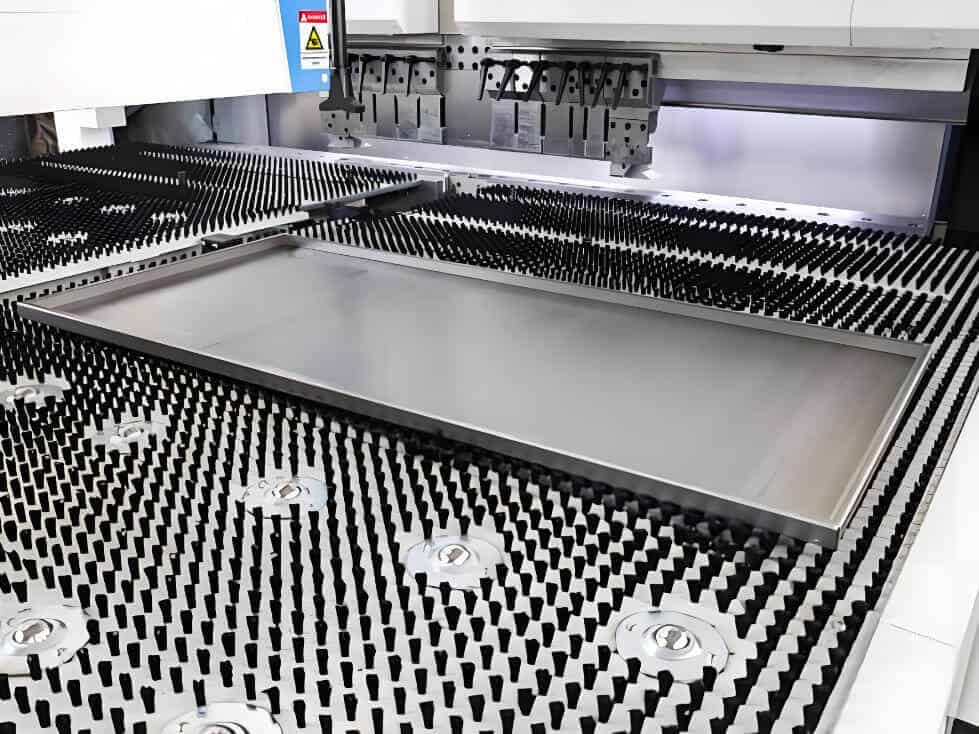
Solution: How to configure an “elevator panel friendly” press brake?
Having understood the pain points of bending elevator panels, we will now discuss how to configure a press brake suitable for bending elevator panels. The reason why a dedicated elevator panel press brake is more stable and efficient than a regular press brake lies mainly in its configuration.
CNC crowning (deflection compensation)
As mentioned in section 5.2 above, long boards are prone to deflection deformation when bent. To address this issue, we need to configure a CNC crowning system, which helps keep the bend angle consistent from left to right along the full bending length.
CNC crowning (deflection compensation) is commonly implemented as a mechanical or hydraulic system, essentially compensating for the deflection of the worktable/slider under stress. Key selection criteria include: whether it can be called up and adjusted in the CNC system for accuracy and stability, and the verification method for the consistency of long workpiece angles. It’s also important to check whether it can call up and save basic parameters, such as plate thickness and length, within the CNC system.
Different machine models may use different compensation structures (mechanical wedges, hydraulic compensation, etc.), but the goal is the same: to compensate for the deflection of the worktable/slider under stress based on parameters such as plate thickness, length, and material, thereby improving the consistency of long workpiece angles.
Equipping a CNC crowning system can significantly reduce the number of trial bends, lower the rework rate, and improve product consistency.
Non-marking Tooling & Protection
It is mainly used to prevent or minimize surface scratches and indentations on brushed stainless steel, mirror stainless steel, and film-protected stainless steel (with protective film).
Non-marking bending solution can be used in combination. We can lay a layer of polyurethane protective film on the lower die’s V-shaped opening, or choose a lower die with a suitable V-shaped opening width and corner radius to prevent the lower die’s V-shaped opening edge from being too sharp and causing indentations on the board surface. At the same time, using a special edge-pressing die to fold and flatten the edge of the board can eliminate burrs and enhance edge rigidity.
Workers should also pay attention to on-site management, and always keep the workbench and the lower die V-shaped opening clean to prevent particles or iron filings from scratching the panel. They should also standardize the way workers flip the panel to avoid friction.
Deep Throat & Large Daylight
This is to address the multi-pass interference (collision risk) problem we mentioned in 5.5. The greater the throat depth and opening, the better to prevent large panels from hitting the frame during flipping or forming.
Throat depth determines the maximum depth to which the sheet metal can be inserted into the machine tool, while opening height determines the maximum distance between the upper and lower dies. When selecting, you should evaluate based on the maximum unfolded width of the panel you are processing and the flipping path of the most complex shape. Throat depth/opening needs to be checked for interference based on the maximum unfolded width of the panel and the most complex flipping path. U-shaped/box-shaped/deep folds usually require greater throat depth and opening.
Front Support / Sheet Followers
This is used to solve the problems mentioned in 5.4, such as the sagging of long, thin plates, which leads to unstable angles and reverse deformation, as well as the problem of excessively labor-intensive operation.
During bending, the material support system follows the upward movement of the sheet material, providing stable support. This can be easily completed by a single person. It not only reduces reverse deformation of the sheet material but also lowers the probability of surface scratches.
When purchasing, we need to check whether it is a CNC sheet followers (follower supports), and also whether its load-bearing capacity and stroke can meet your board size, and whether the support position can be adjusted.
Back gauge positioning capability and “parameter standardization”
Equipping a CNC back gauge system can reduce positioning deviations and cumulative dimensional errors during multiple bending processes.
The CNC system can save the set parameters such as tooling, compensation value, angle, and back gauge position to the program library, which can be easily called up each time the same panel is bent, reducing the number of trial bends, ensuring the repeatability and consistency of bending, and achieving stable mass production.
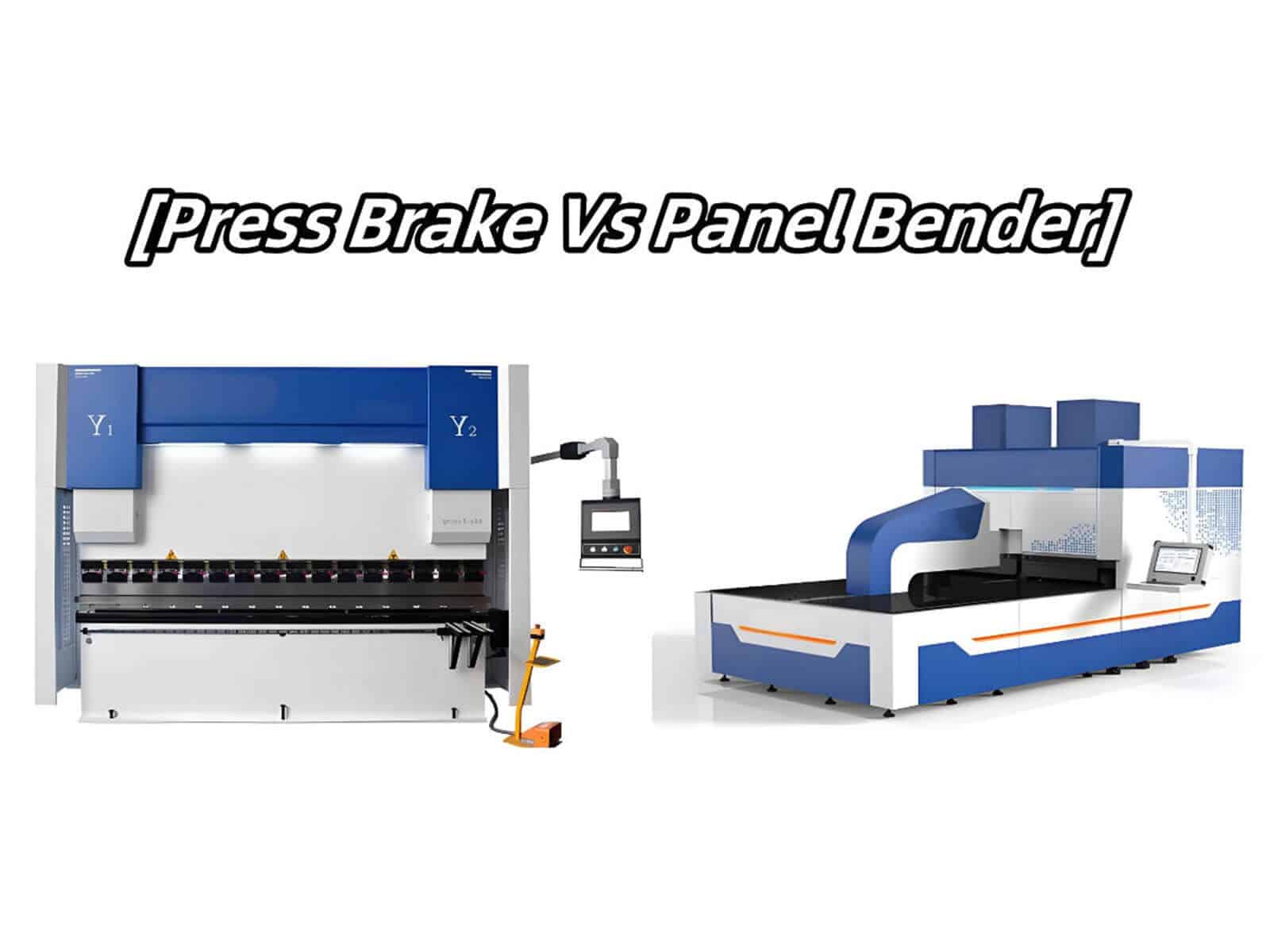
Industry comparison:press brake vs Panel Bender
When is a press brake more suitable?
If your products include various thicknesses, sizes, and shapes, and you need to process some complex parts regularly, and frequently use tooling of various specifications, and you are looking for a higher cost-performance ratio, then purchasing a press brake is more suitable. For a broader overview of how press brakes are used across industries, you can also refer to our guide to press brake applications and common bend types.
When is Panel Bender more suitable?
If your work mainly involves processing panel products with high output, high requirements for production cycle and consistency, and you have a sufficient budget, then choosing a panel bender (panel bending center) is more suitable.
Compromise approach: press brake + quick clamp + segmented die + parameter library
For most elevator panel manufacturers, the most cost-effective compromise is to combine a press brake with a quick-clamping system, segmented tooling, a follow-up material support system, and a CNC system. This solution offers a more cost-effective approach while reducing tooling changeover time and manual labor, thus achieving high-efficiency production.
How to choose between extra-long single press brake and Tandem press brake?
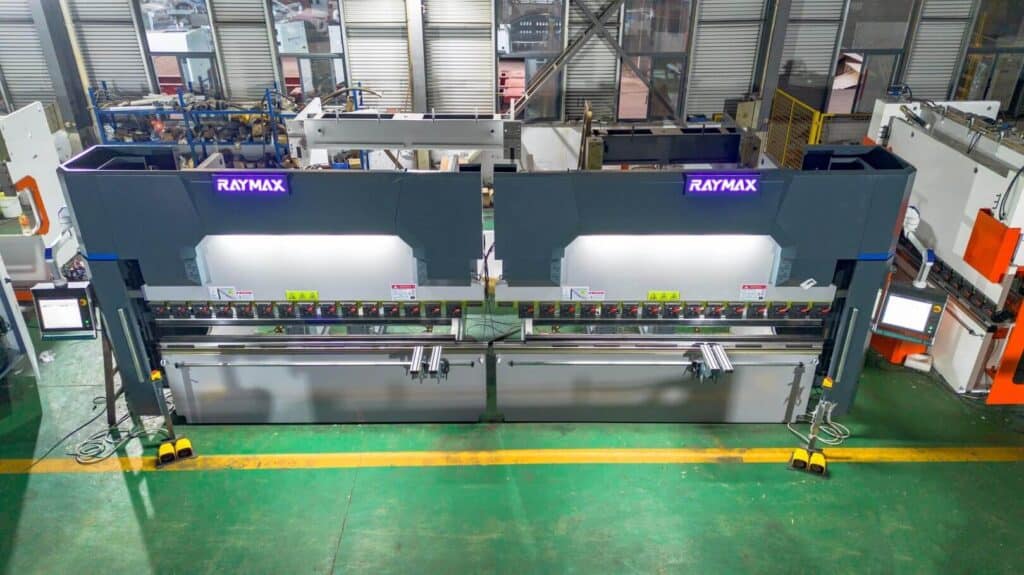
Application scenarios, advantages and disadvantages of extra-long single press brake
The extra-long single press brake has a simple structure, with only one CNC system, making it easy to control and maintain. However, its large size makes transportation and installation more difficult. It is suitable for factories that process ultra-long workpieces on a long-term basis.
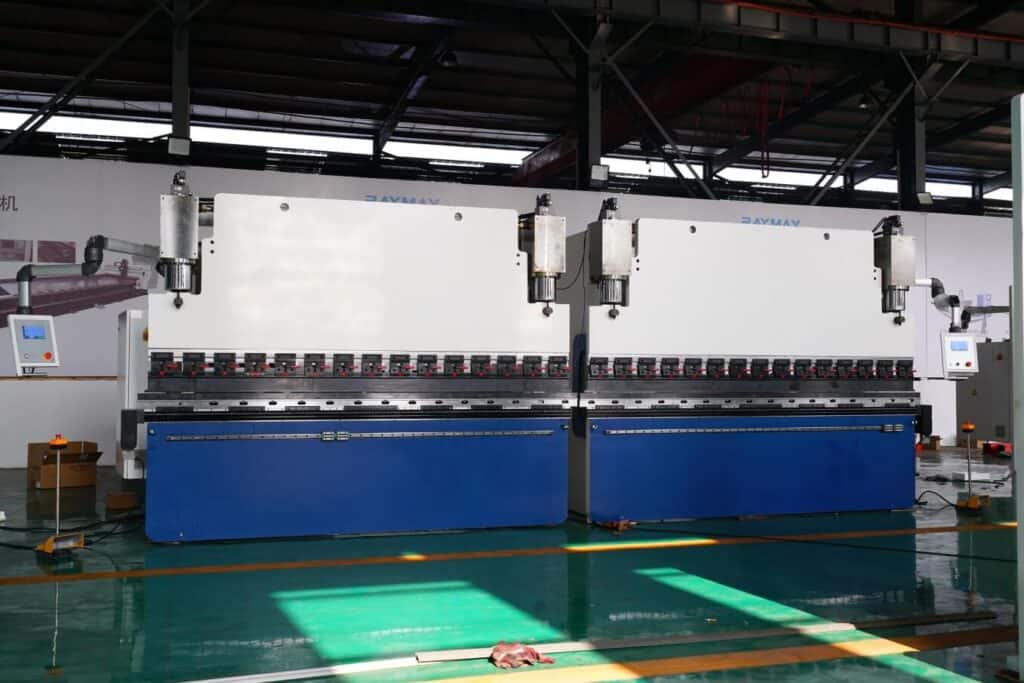
Tandem press brake: applicable scenarios, advantages and disadvantages
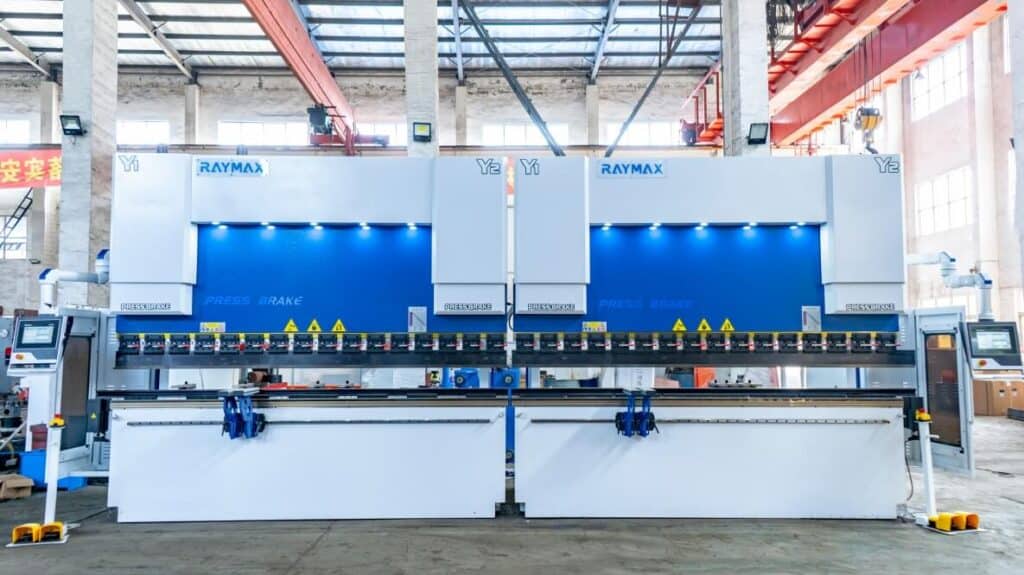
Dual-machine linkage, as the name suggests, involves two machines working together. These two machines can perform independent bending or be combined into a single extra-long press brake for processing extra-long parts, offering high flexibility. It is suitable for factories that need to process both standard and extra-long parts, maximizing equipment utilization. However, its control system is relatively complex, resulting in higher initial investment costs. For a deeper explanation of machine structure, suitable applications, control requirements, and purchasing checks, see our guide to tandem press brake benefits and buying considerations.
Selection Judgment Framework
When selecting a machine, we need to consider the following questions: What is the length of the longest piece we usually process? Are the main products processed mostly extra-long or standard parts? How flexible is the production line? Can the site meet the installation requirements? Enterprises need to make choices based on their actual situation and should not blindly pursue large or expensive machines.
|
Contrast |
Ultra-long single-piece press brake |
|
|---|---|---|
|
Advantages |
Simple structure, easy to control and maintain. |
Highly flexible, it can be used as a standalone machine or in pairs to produce extra-long parts. |
|
Disadvantages |
Transportation and installation are quite difficult. |
The control system is relatively complex and has a high initial investment cost. |
|
Applicable Scenarios |
Factory suitable for long-term processing of extra-long workpieces. |
Suitable for factories that need to process both standard parts and extra-long parts. |
How to ensure consistency in elevator panel mass production? (SOP/Quality Control)
First piece confirmation (angle, side length, straightness, appearance)
After each batch of materials is changed, the first piece of material processed must be inspected, and only those that pass inspection can be used for mass production. Inspection items include: the angle of the bent edge, the side length, the straightness, and whether there are scratches or indentations on the surface.
Process control (sampling frequency, measuring instruments, records)
During mass production, it is also necessary to establish a standardized sampling frequency, such as sampling every 20-50 pieces processed. Using high-precision vernier calipers and universal protractors for measurement and recording helps us to identify and correct problems in a timely manner.
Sources of consistency (standardized procedures/tooling combinations/operating specifications)
Store all proven tooling combinations, pressure settings, crowning values, and other validated parameters in the CNC system to eliminate operator setup or adjustment based solely on experience. At the same time, professional operating manuals should be developed to ensure operators strictly follow them for daily cleaning, placement, and flipping operations.
Get an accurate quote: What do you need to prepare for an RFQ checklist?
If you are planning to purchase an elevator panel press brake, you can send the following list to the supplier when requesting a quote:
|
Evaluation Dimensions |
Information required |
|---|---|
|
Drawings and workpiece information |
The dimensions of the longest and widest panels, panel shape, panel hole positions, and whether there is a need for edge binding/sealing. |
|
Materials and appearance standards |
Material type, thickness range, surface type (brushed/mirror/film-protected), and allowable defect standards. |
|
Production capacity and model changeover |
Daily output, frequency of changing parts of different specifications, and the number of operators planned for this machine. |
|
On-site conditions |
Workshop power supply voltage, workshop equipment installation space, and whether to consider connecting with robots for automation in the future. |
Conclusion
In summary, the core of elevator panel bending lies in three key elements: optimal appearance, high consistency, and stable production cycle. Achieving these three points requires upgrading the press brake configuration, with core components including: CNC crowning (deflection compensation), a non-marking bending solution, a material support system, and precise positioning.
If you wish to upgrade your elevator panel bending production line, please send us your drawings, material specifications, thicknesses, and production capacity requirements. RaymaxTech will provide you with a mature elevator panel bending solution and a detailed quotation.
Ready To Upgrade Your Metal Fabrication Line?
Email Us For A Free Consultation.
Frequently Asked Questions (FAQs)
Related Blog
Press Brake Tooling Compatibility Guide: Punch & Die Standards, Segmented Tools & Clamping Fit
Tooling & Clamping for High-Mix Production: Quick Clamp vs Hydraulic Clamp vs Manual Clamp ROI
Press Brake FAT/SAT Acceptance Checklist: Accuracy Tests, Tolerance & Documentation
Press Brake RFQ Checklist: 14 Fields You Must Provide for an Accurate Quote
-1-1024x768.jpg)
How to Spec a Press Brake for Tolerance: Angle, Flange Length, Crowning, Backgauge & Acceptance Checklist
-1024x768.jpg)
Press Brake Crowning Troubleshooting: Fix Uneven Bend Angles Across Long Parts
-1024x768.jpg)
How to Improve Press Brake Bending Consistency: Causes, Checks & Solutions
-1024x768.jpg)
How to Measure Press Brake Bending Angle: Tools, Methods & Calibration Pitfalls
-1024x768.jpg)
Press Brake Backgauge Accuracy Troubleshooting: How to Diagnose Flange Length Errors
.jpg)
Why Is My Press Brake Angle Inaccurate? Common Causes, Diagnosis Flowchart & Fix Priority
.jpg)
Stainless Steel Bending Force: 304 vs 316 (Correction Factors, Springback & V-Die Selection)
Non-Marking Press Brake Bending: How to Prevent Scratches on Brushed, Mirror-Finish & Film-Protected Sheets
Post Your Review
Share Your Thoughts And Feelings With Others